Call for a Comprehensive Diversity Initiative
Advocacy Campaign

Project Type
Advocacy Campaign
Location
University of Southern California, Los Angeles
Project Leads
Abriannah Aiken, Darwin Hu, Lauren Jian, Jameel Marsden, Katie Hayes, Justin Wan, Erin Light
Date
2020 - 2022
"The impact of architecture on underrepresented communities should comprise the foundation of architecture education at USC."
ARCH 114 Rewritten: The freshman “into-to-architecture” class was rewritten to focus less on theory and more on how design affects Black, Indigenous, women, disabled, and other historically excluded communities.
Software costs covered: USC paid for required design software— Rhino and Adobe— removing a major expense for the first time.
Students Representation on Faculty Councils: Student-representatives were added to faculty committees, giving students a voice in school decisions.
Increased Awareness of Inequality in Design Students and faculty began talking more openly about how architecture can create inequality—and how it can be used to address it.
Students create Architecture + Advocacy, an independent non-profit where students work with local nonprofits to co-design spaces of belonging and justice. The organization also creates a supportive environment for students doing this work—something that didn’t exist before.
As protests over the murder of George Floyd swept the country, students at the USC School of Architecture turned their attention inward, advocating for future architects to be taught how design shapes race, power, and neighborhood inequality. Known as the Comprehensive Diversity Initiative (CDI), the campaign began as a push to reform architectural education. Its victories—from reducing financial barriers to reshaping the curriculum—would ultimately give rise to Architecture + Advocacy.
Campaign Wins
-
Why Change was Necessary
Throughout American history, architecture and the built environment have been used to exclude communities of color, yet this inequality is rarely mentioned in architecture curriculum. Segregation, redlining, freeway construction, and hostile architecture have left lasting scars on communities of color that are still felt today; A child born in Compton– a historically Black neighborhood in LA– is expected to live 10 years less than one born in Beverly Hills. At USC, architecture students were not introduced to such topics until their 3rd year, and then almost exclusively as elective courses.
Simultaneously, USC had just admitted its most diverse class ever. Yet students of color still faced almost insurmountable barriers upon matriculation– such as expensive materials and software and micro-aggressions– that pushed many students to drop the major. These inequalities in access and in curriculum representation are also reflected in the profession; Today, only 2% of licensed architects are Black and 0.2% are Black Women.
When architecture schools do not teach future architects how racial injustice has shaped neighborhoods, and fail to create accessible pathways into the profession, communities of color remain excluded from design decisions, and cycles of injustice continue. This reality pushed our team to take action.
The Comprehensive Diversity Initiative
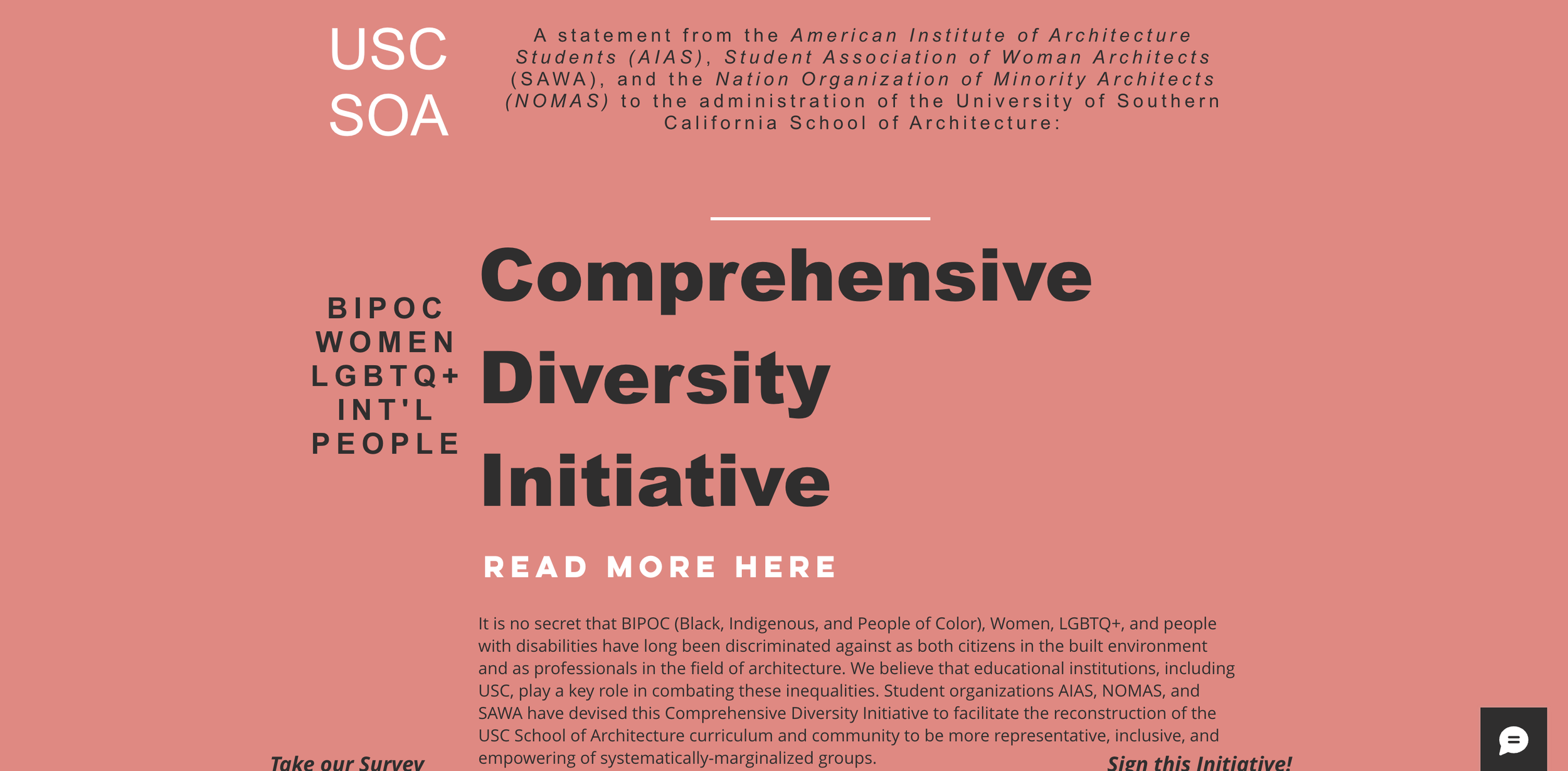
To hold educational institutions accountable, student-organizers at USC joined voices with students at Harvard, Yale, and other architecture schools across the country. They published a letter and list of recommendations to the administration. The letter was signed by all 8 student-organizations in the graduate and undergraduate programs plus 96 students and alumni.
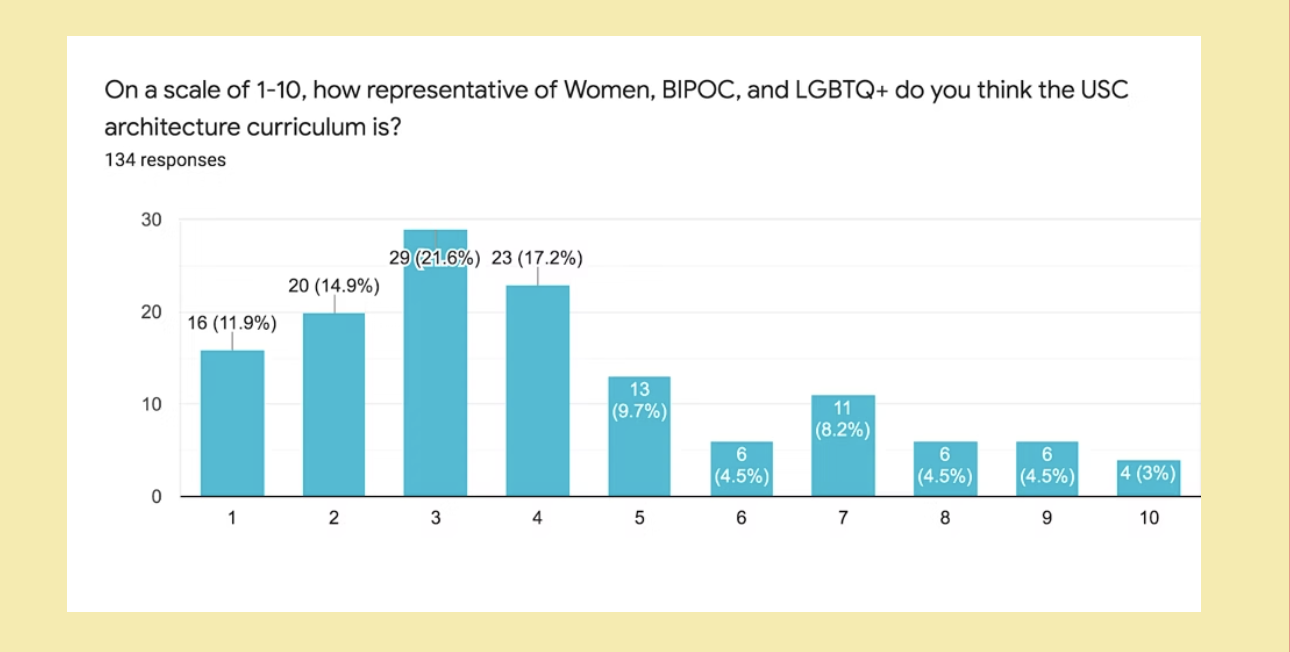
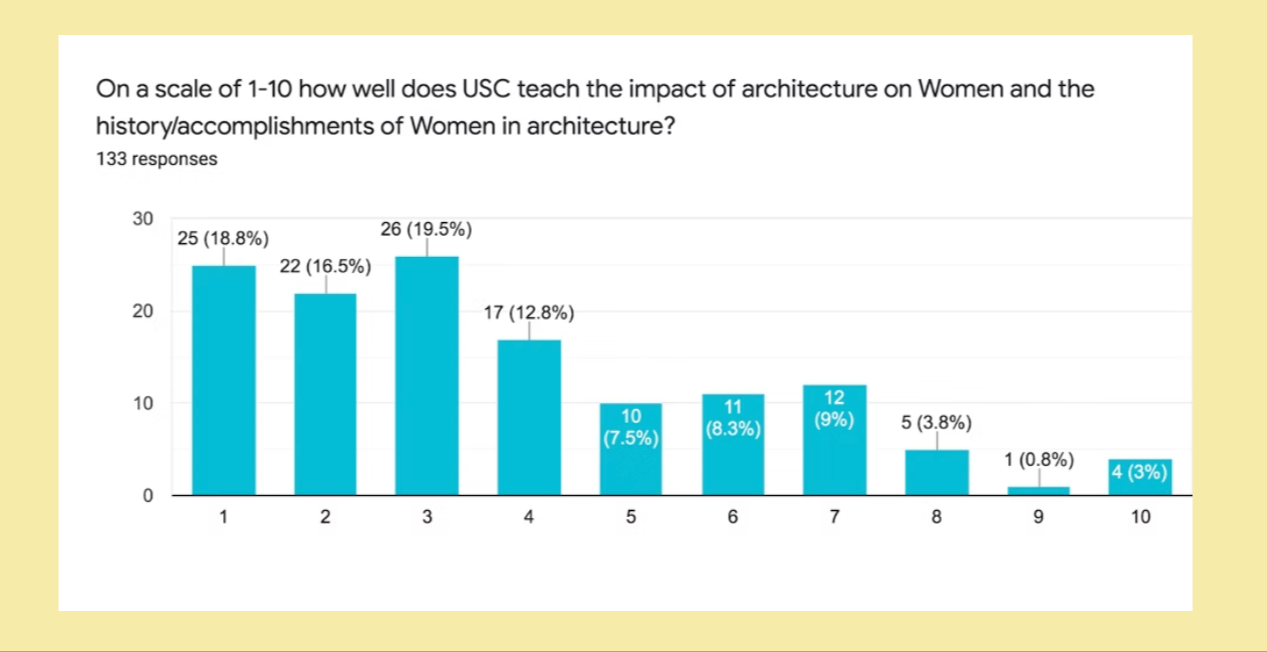
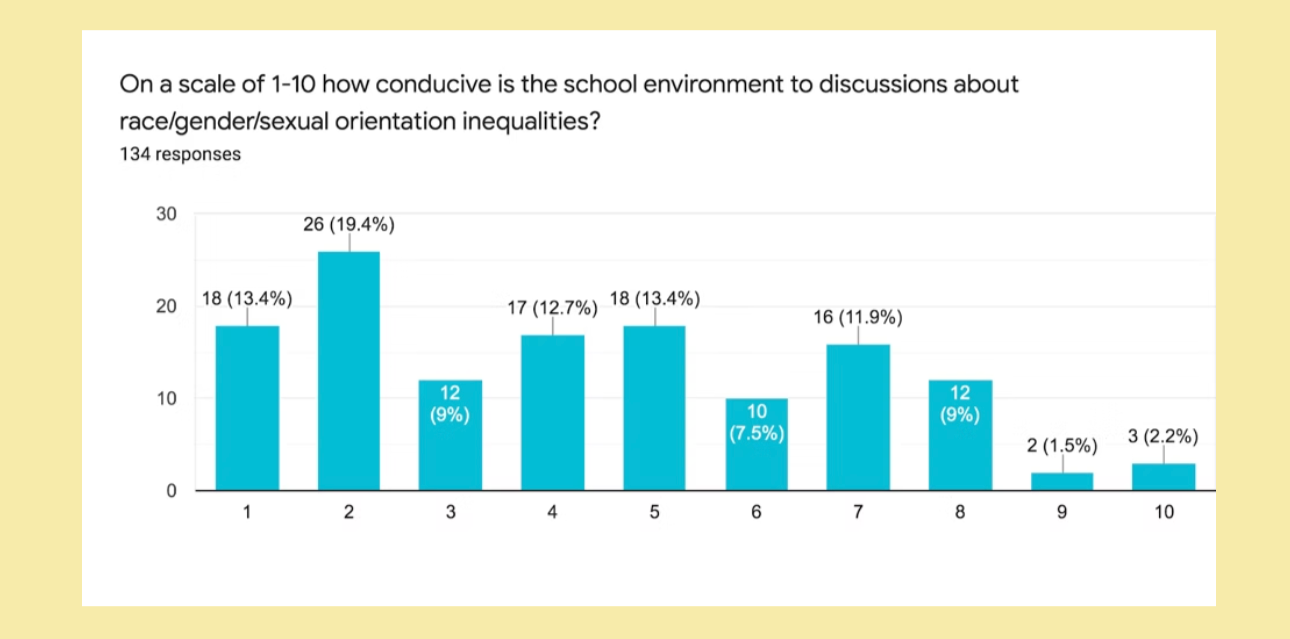
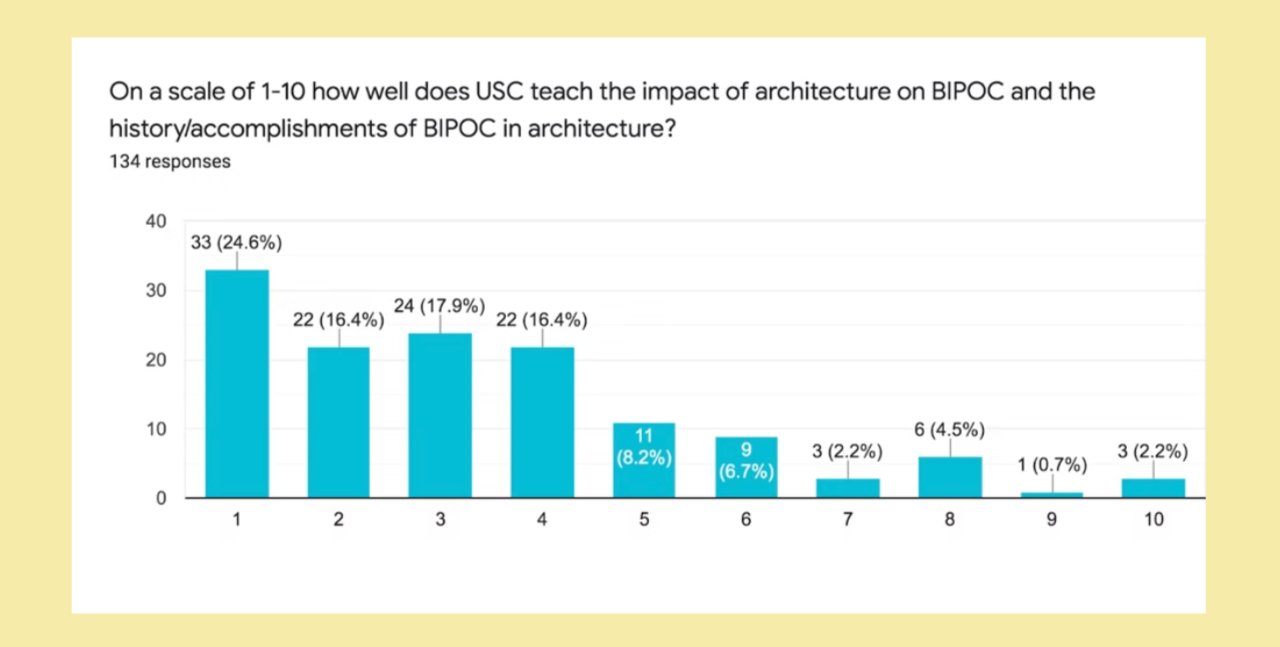
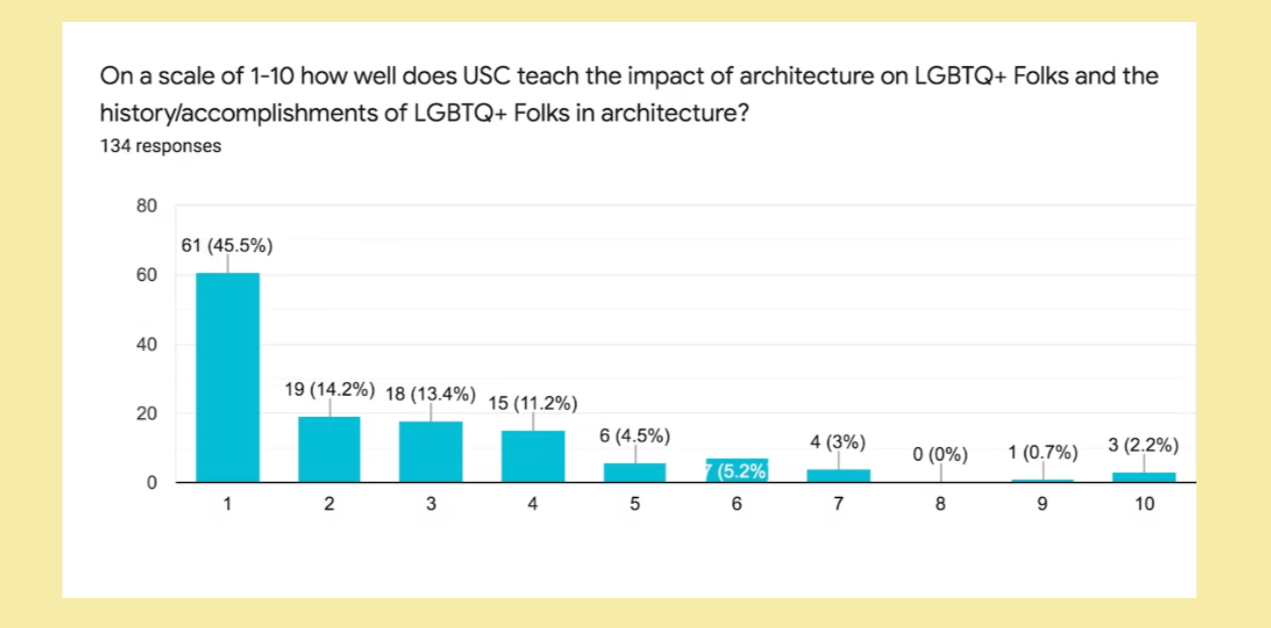
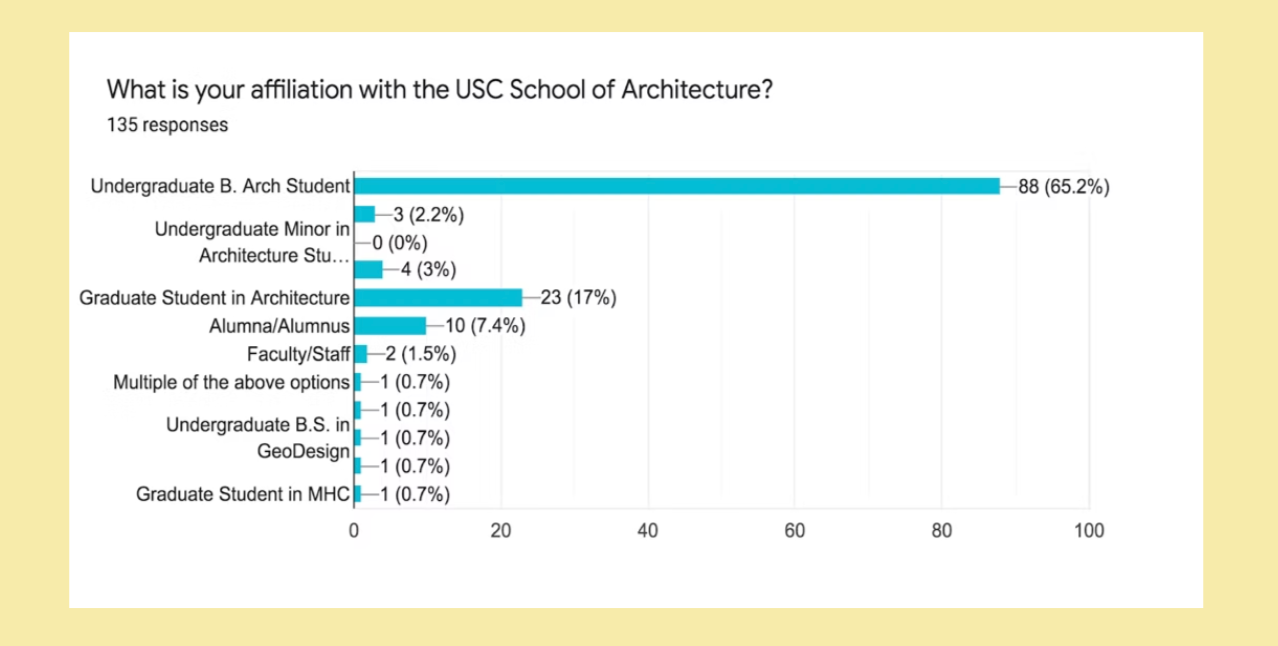
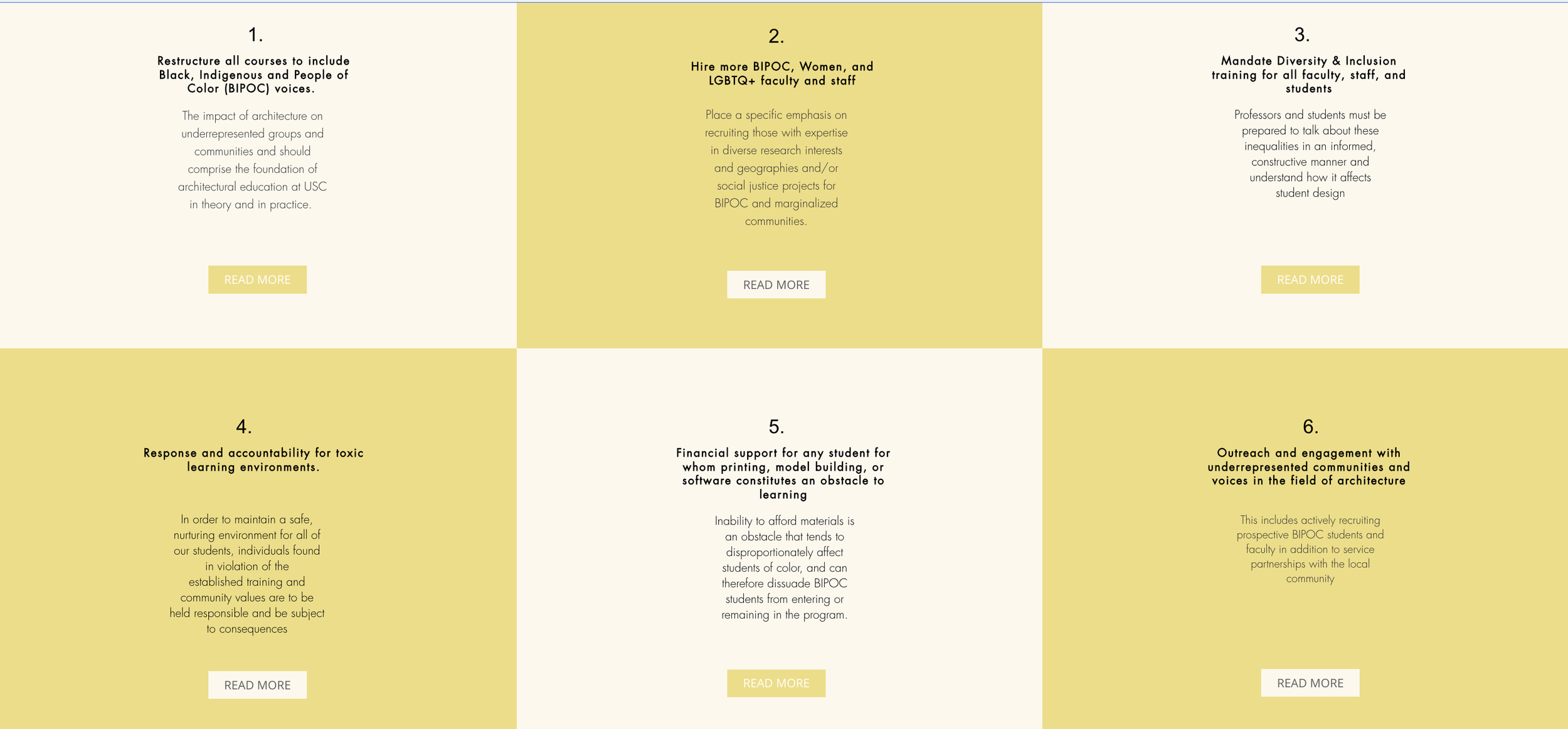
Informed by a survey taken by over 135 students, the “Comprehensive Diversity Initiative" (CDI) had 6 pillars:
Restructure all courses to include Black, Indigenous and People of Color (BIPOC) voices.
Hire more BIPOC, Women, and LGBTQ+ faculty and staff
Mandate Diversity & Inclusion training for all faculty, staff, and students
Response and accountability for toxic learning environments.
Financial support for any student for whom printing, model building, or software constitutes an obstacle to learning
Outreach and engagement with underrepresented communities and voices in the field of architecture
While inspired by organizing efforts at other architecture schools, CDI was unique in its intersectional approach. It not only highlighted opportunities to increase opportunities for Black students, but also for women, immigrants, LGBTQ+, and other marginalized groups. It was also the only group to use a student survey to guide the creation of its demands. The result was a diverse, broad-based coalition of students standing together for justice. All student organizations signed the initiative. This democratic, coalition-building approach to organizing would eventually become the hallmark of Architecture + Advocacy, and was reflective of the group’s desire to equip all students, regardless of identity, to design spaces that repair injustice.
Following the letter, student-organizers used a combination of tactics, including 1:1 meetings with professors, public comment, surveys, listening sessions, and media outreach, to rally support for the initiative and enact changes.
Lasting Impact
The campaign produced meaningful, lasting change. For the first time, USC funded required design software, removing a major financial barrier during a period of national and economic uncertainty. The introductory architecture course (ARCH 114) was rewritten to center the profession's impact on Black, Indigenous, and other historically marginalized communities– making inclusive design a foundational topic, instead of an elective. Some faculty diversified course readings and precedent studies to include more women and BIPOC architects. Additionally, student representatives seats were added to every faculty council, giving students a voice in school governance.
In the years since, these reforms have meaningfully shifted the culture of the school; more students are aware of inequality in the built environment, and it is a more common topic of discussion. This is a powerful first step, but conversations often still feel performative and not tied to residents’ lived experience. More work is needed to truly embed justice throughout the curriculum.
The campaign also revealed a larger truth: changing architecture schools is just one piece of the puzzle. Neighborhood inequality isn't created in classrooms—it is created through decisions about real places, affecting real people. Architecture education is not the only thing that must change; a new architectural development process is needed. A process where local residents have decision-making power, and architects work alongside them to build spaces that repair neighborhood inequality. CDI’s 6th demand for “outreach and engagement with underrepresented communities” reflected the need for this shift, and students’ desire to make it reality. From this understanding, Architecture + Advocacy was born.
What began as a movement to democratize architectural education evolved into a broader mission to equip residents with the tools to influence the design and development decisions that affect their lives. Today, Architecture + Advocacy continues that work by bringing architects, students, and community members together to co-create spaces that increase access to resources, reflect local culture, and challenge the systems that produce neighborhood inequality.
Student-Led Survey Results
The Comprehensive Diversity Initiative (CDI) distinguished itself from campaigns at other architecture schools by grounding its demands in a student-led survey. The responses to these and other questions were used to both shape the initiative’s six demands and to demonstrate to faculty and administrators the support those demands had across the student body.