Drum Cases
Design-Build
Partner
Inner-City Arts
Project Type
Design-Build
Location
Downtown, Los Angeles
Project Leads
Nima Gupte, Cameron Bloodgood, Frances Hsu
Date
2026
"When I become an architect, I will build spaces where people feel safe and feel like they belong."
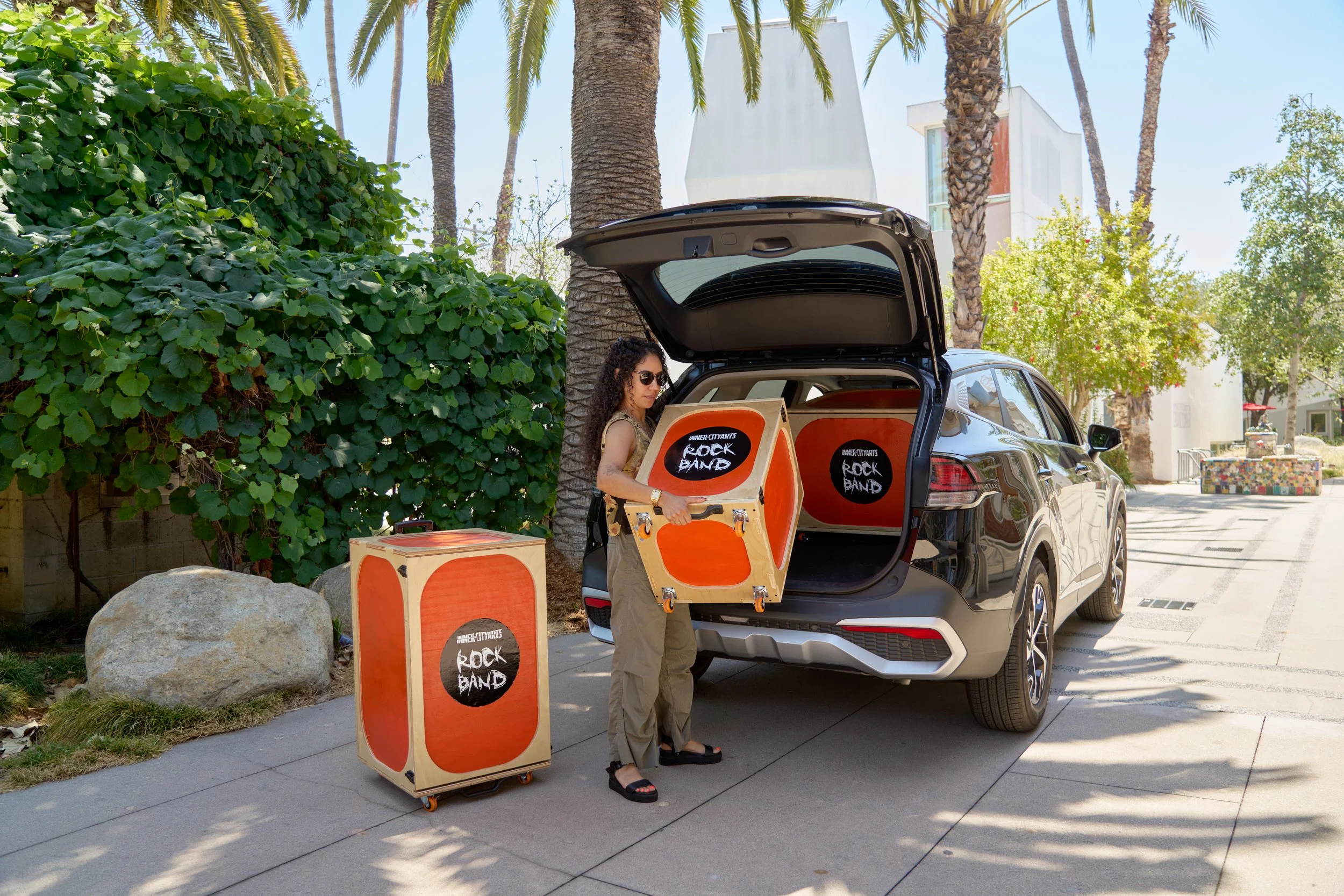
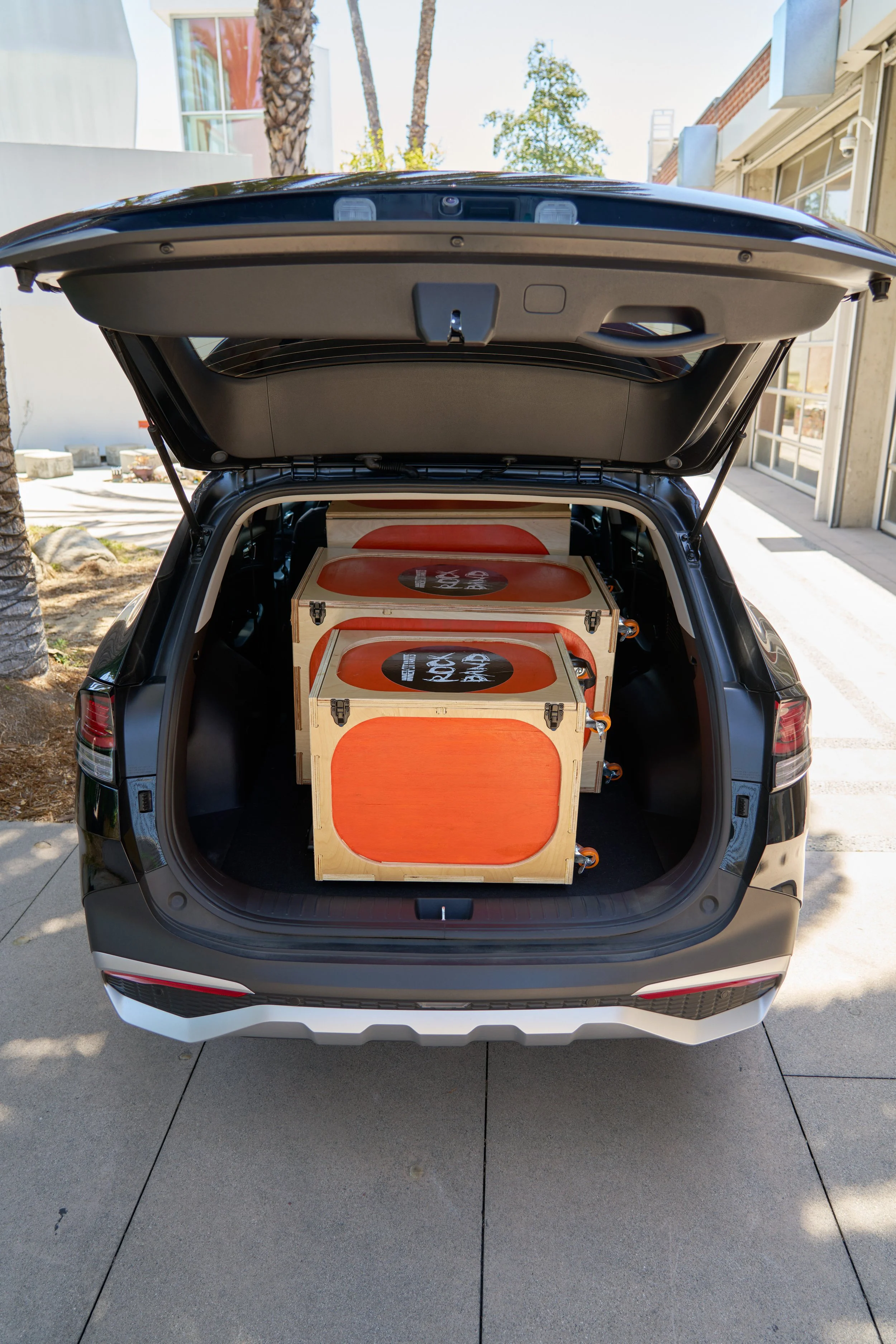
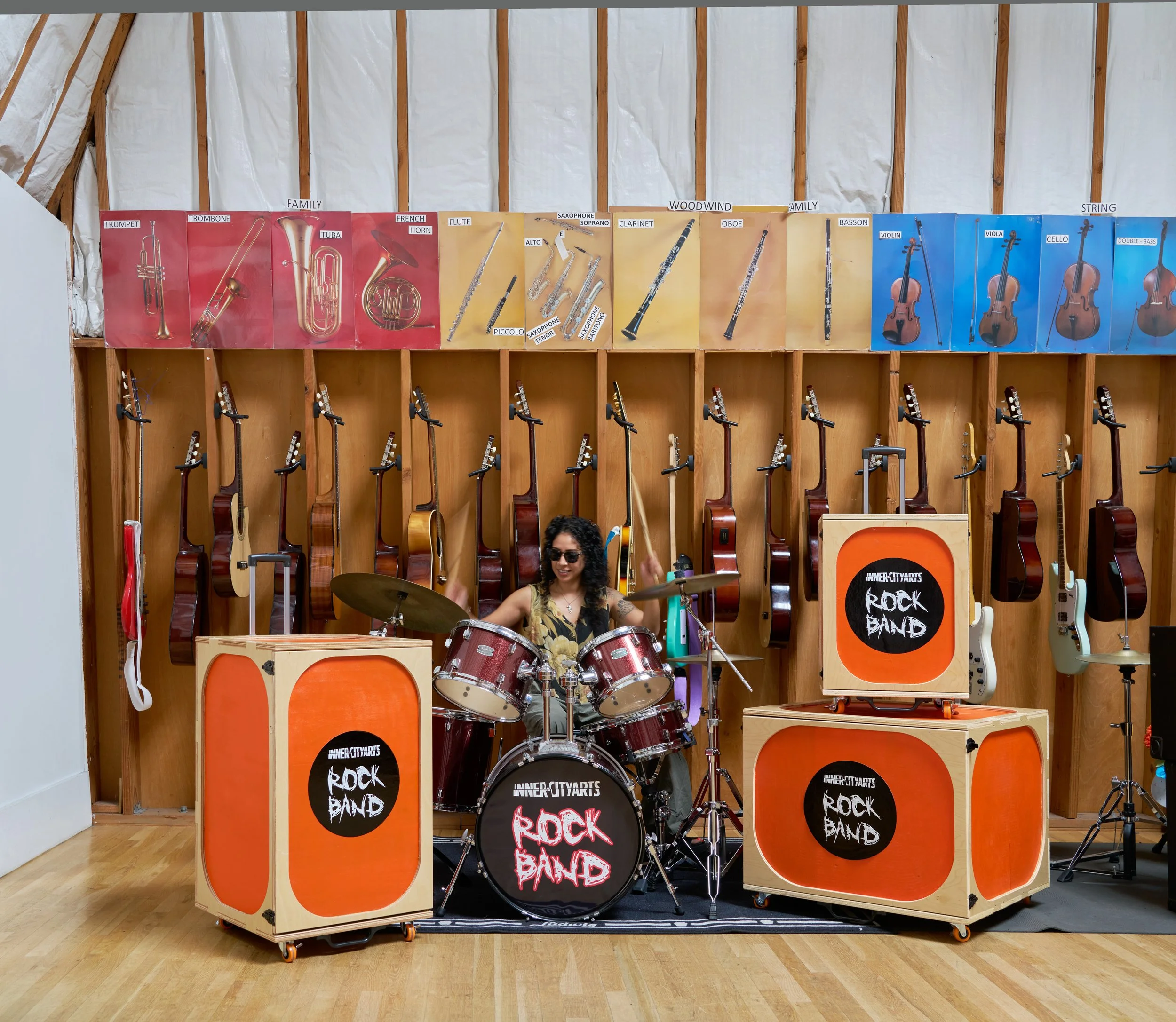
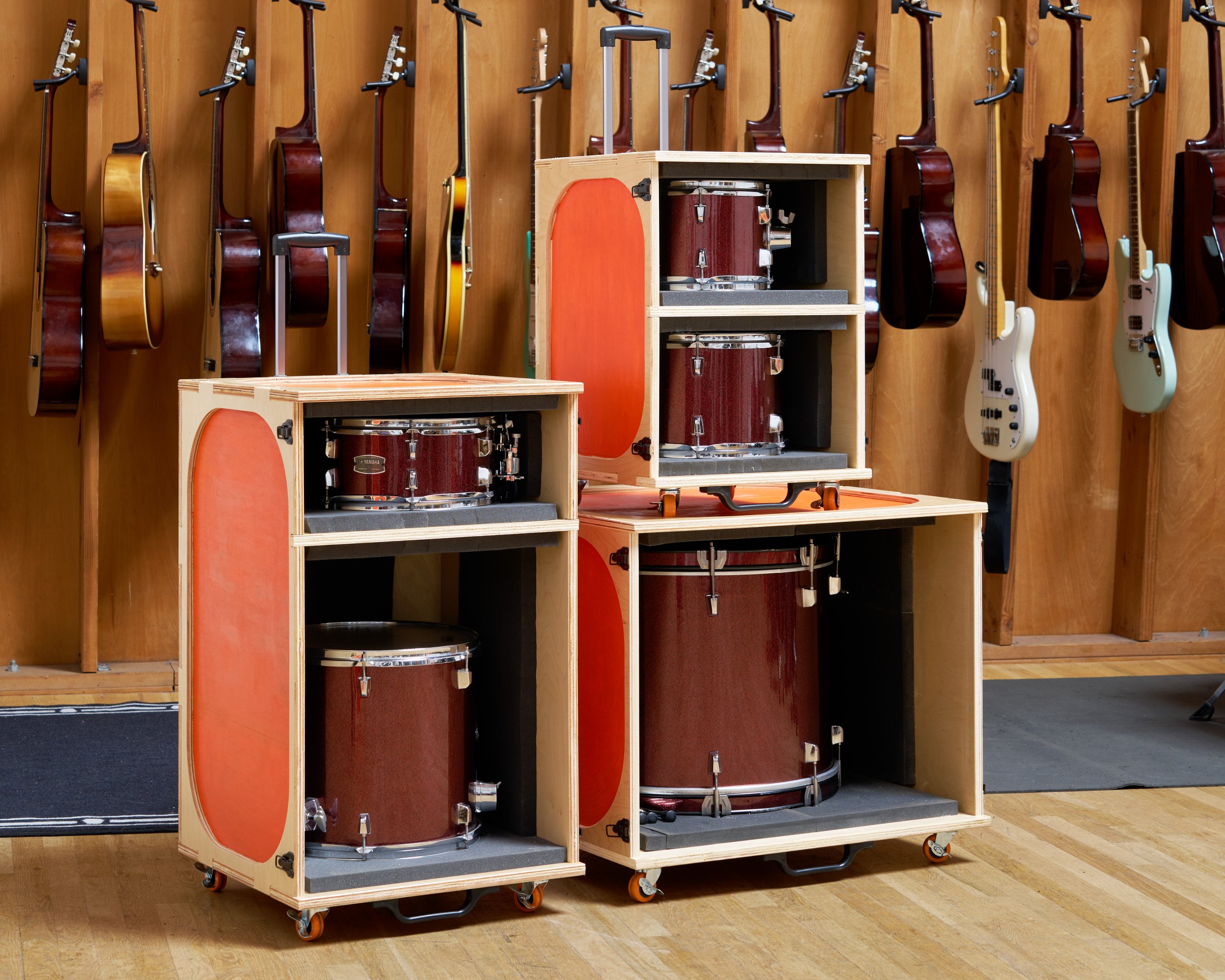
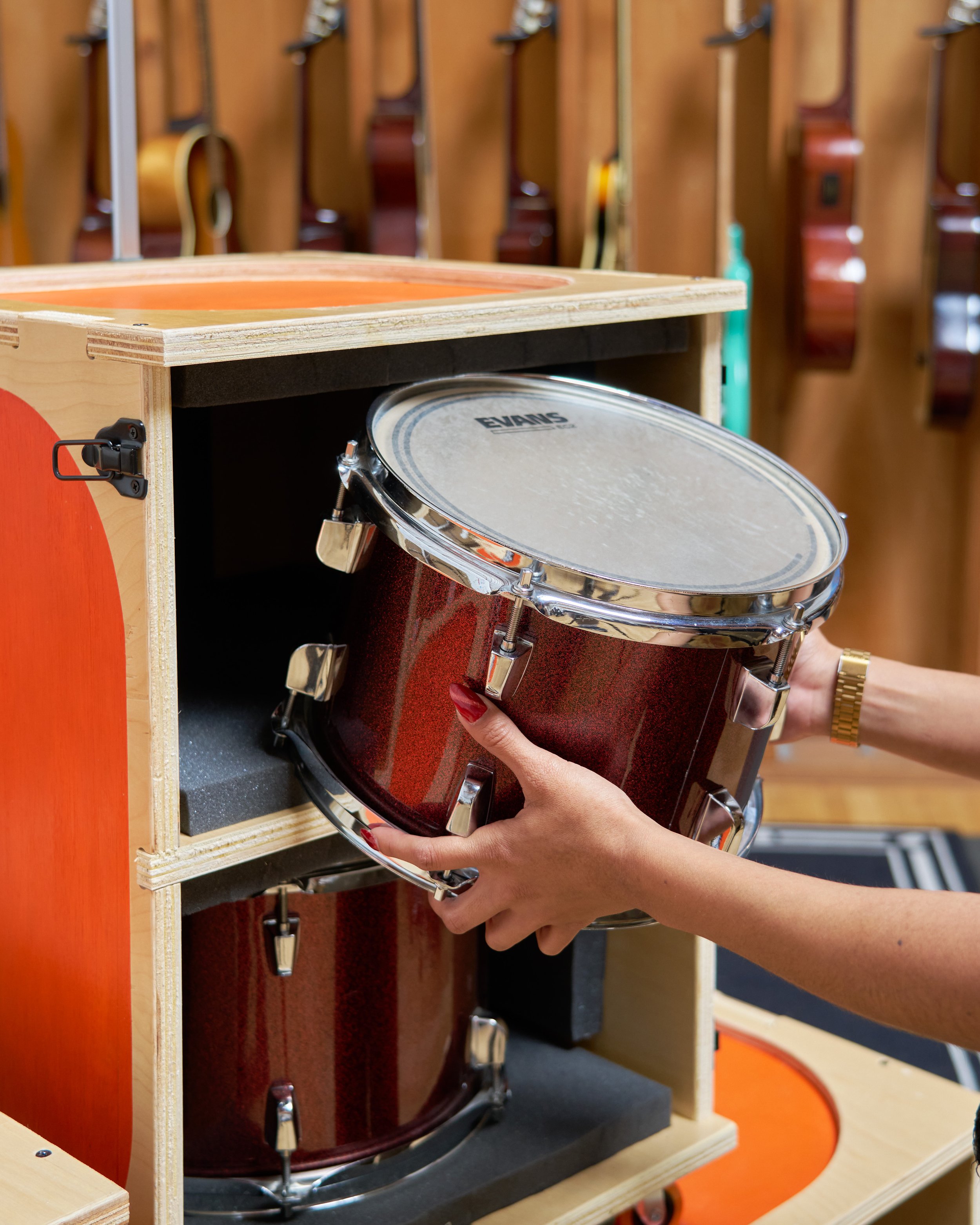
The Inner-City Arts youth rock-band had a problem: their drums bounced around the car every time they traveled to gigs. Working alongside the musicians, high-school students in Architecture + Advocacy's Design-Build program designed and built a custom carrying solution informed by the band's real-world needs. This hands-on project introduced young people to architecture for the first time, equipping them with the skills to turn their lived experiences into thriving communities.
Opportunities for young people to learn about architecture are surprisingly rare in Los Angeles. Only5 public high schools in Los Angeles offer architecture classes. While a handful of summer camps and after-school programs fight to bridge this gap, they are typically held at architecture firms or universities, not in the communities they hope to serve. Cost is another barrier: USC’s “exploration of architecture” summer camp costs $11,570. For many young people, architecture remains a topic they never have the chance to explore. And many communities remain left out of the design and decision-making process in their neighborhoods.
Architecture + Advocacy worked with Inner-City Arts, an arts nonprofit in Downtown Los Angeles to develop an accessible architecture course for Los Angeles’ creative young people. Over 20 Saturdays, 20 high-school students learned to think like architects by drawing floor plans, building models, and designing at multiple scales. Their work culminated in a custom furniture-scale solution: custom drum storage cases designed and built for their peers in the rock-band. But the project wasn't just about designing a better carrying case. It was about teaching students to think critically about the world around them, listen to the people most affected by problems, and work together to create thriving neighborhoods.
88% of participants had never been formally exposed to architecture before.
100% emerged with a strong definition of architecture
100% rated their experience a 5/5.
-
Juan and Louis, two of the high-school seniors in the course who grew up in South Central Los Angeles, always had an interest in architecture but had never had an opportunity to learn about it. “My dad is a construction worker, so I grew up always looking at the blueprints. That’s what got me interested in architecture,” said Louis. When asked to design, they brought their lived experience with them. "I grew up taking the bus," Juan said, "So I incorporated that experience into my design for a bus stop." Young people who live in a neighborhood understand it in ways no outside expert can. With the tools of architecture, they can use their creativity to design innovative, community-rooted solutions to inequality.
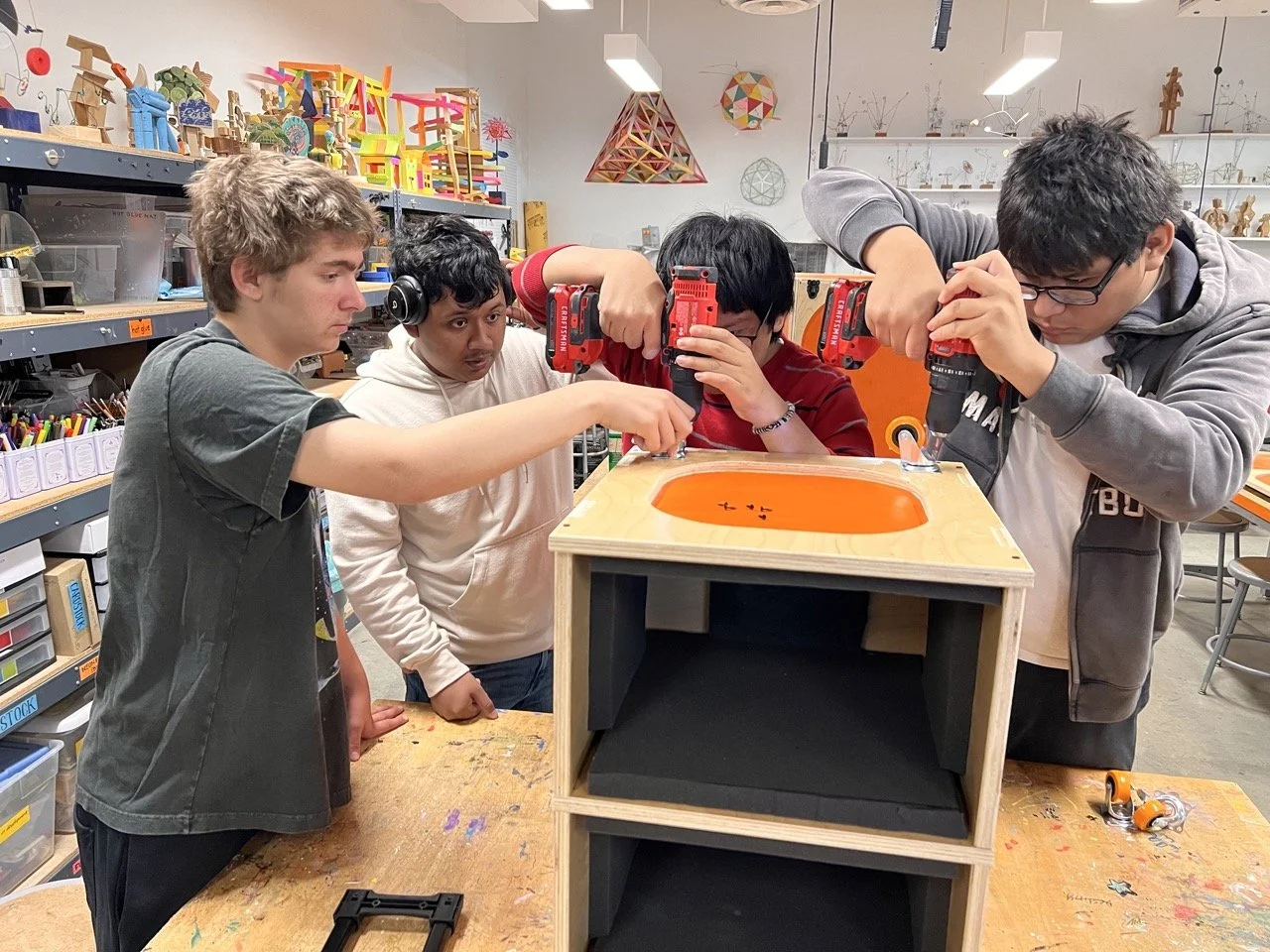
When the students sat down with the rock band, they learned to actively listen to an end-user. They learned what it felt like to travel with a full drum kit -- no padding, no handles, no wheels, no case -- and designed around those real constraints. The result: a custom carrying case, built by hand.
But the project wasn't just about designing a better carrying case. It was about teaching students to see the world through a designer's lens, observing challenges, listening to the people most affected, and creating solutions rooted in lived experience. These lessons extended beyond the classroom. By thinking more deeply about his neighborhood, Juan and Louis have gone on to advocate for their community in new ways. They created a short film documenting the impact of ICE raids on his neighbors -- using the same skills he practiced in the course: observe, listen, and make something that tells the truth.
Our Design-Build program with Inner-City Arts doesn't just teach young people to read floor plans. It equips them to turn lived experience into action, and to build thriving communities from the ground up.
This fall, Juan and Louis will take the next step toward becoming architects—Juan will study architecture at Cal Poly San Luis Obispo and Louis at Los Angeles Trade-Technical College. Both plan to be first in their families to graduate college. Asked what kind of architect he hopes to become, Juan didn't talk about iconic buildings or famous skylines. "When I become an architect," he said, "I will build spaces where people feel safe and feel like they belong."
Process
-
![drums stacked dangerously in the back of a car]()
Before
-
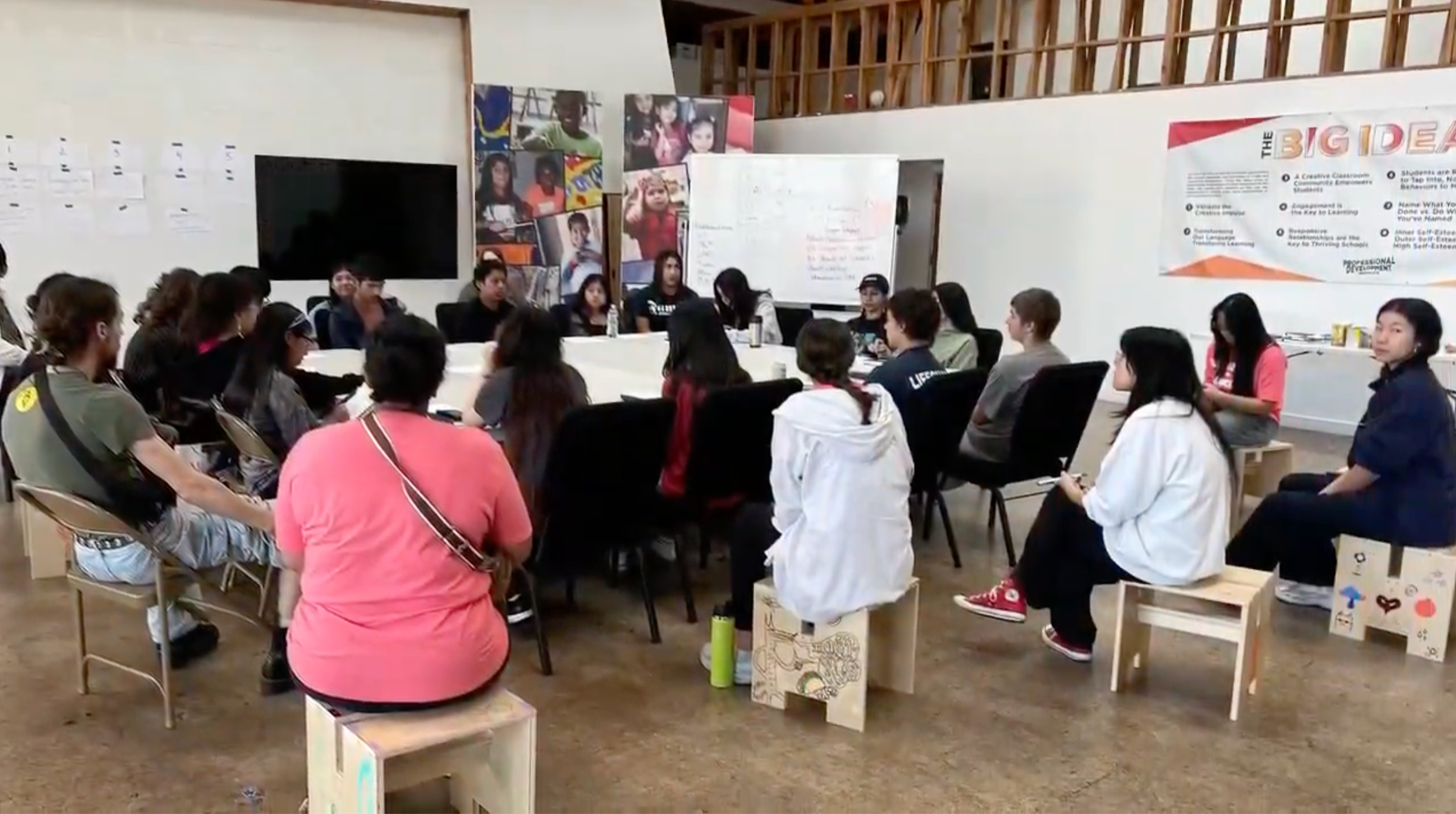
![students gathered around a table]()
Listening Session to Understand the Rock Band’s Needs
-
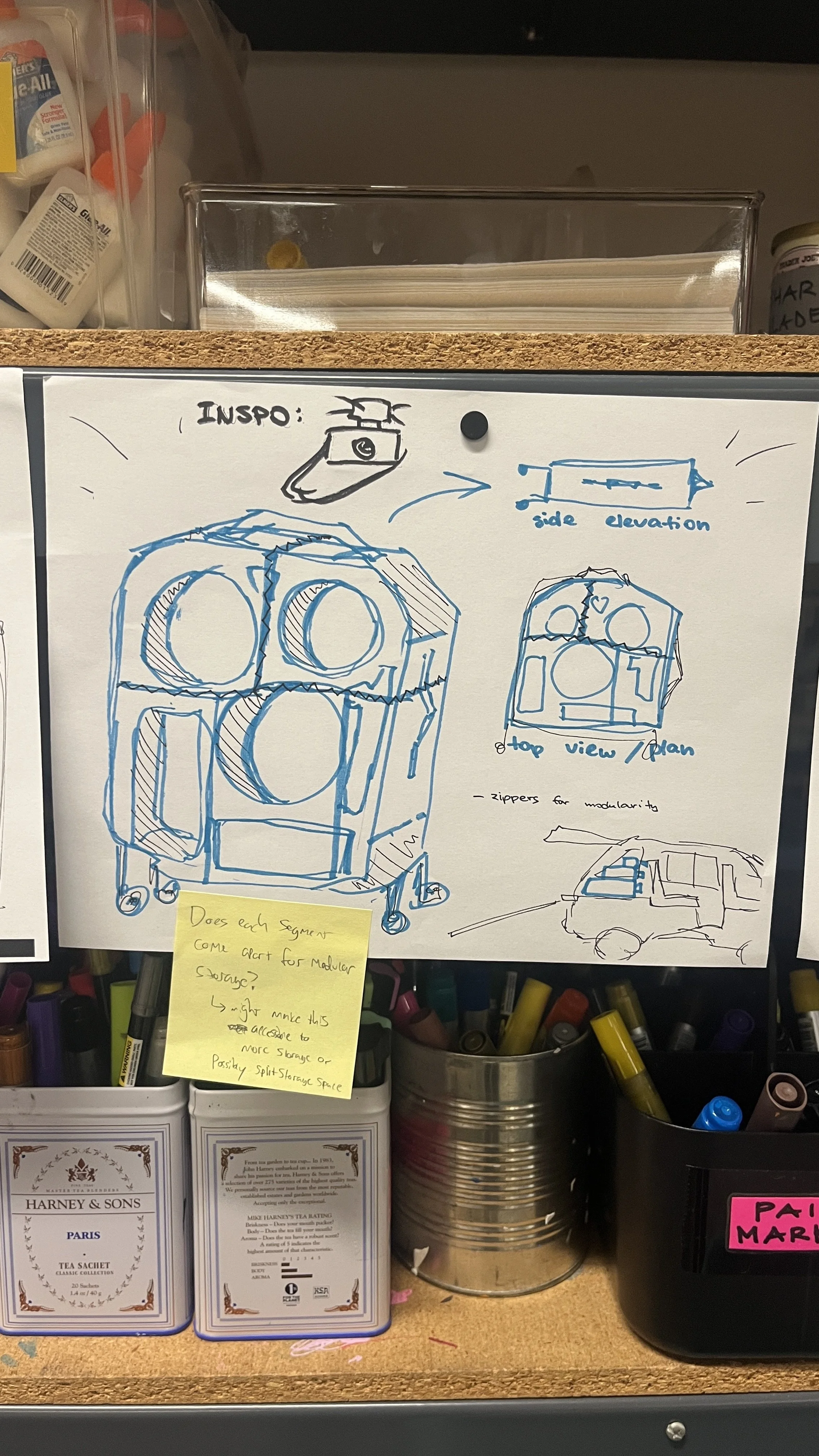
![Sketch in blue marker of potential drum case design]()
Concept Sketch
-
![Sketch in blue marker of potential drum case design]()
Concept Sketch
-
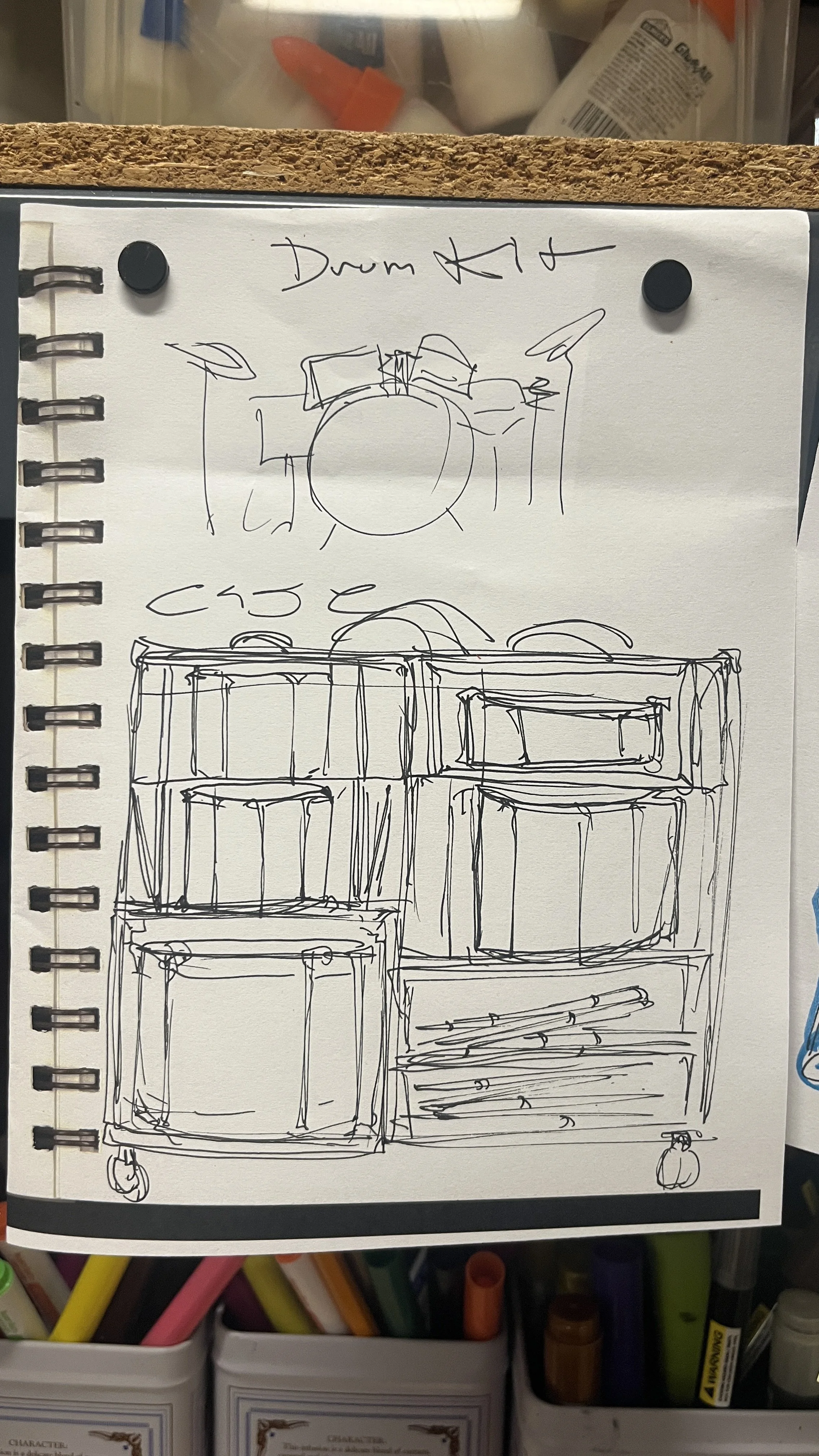
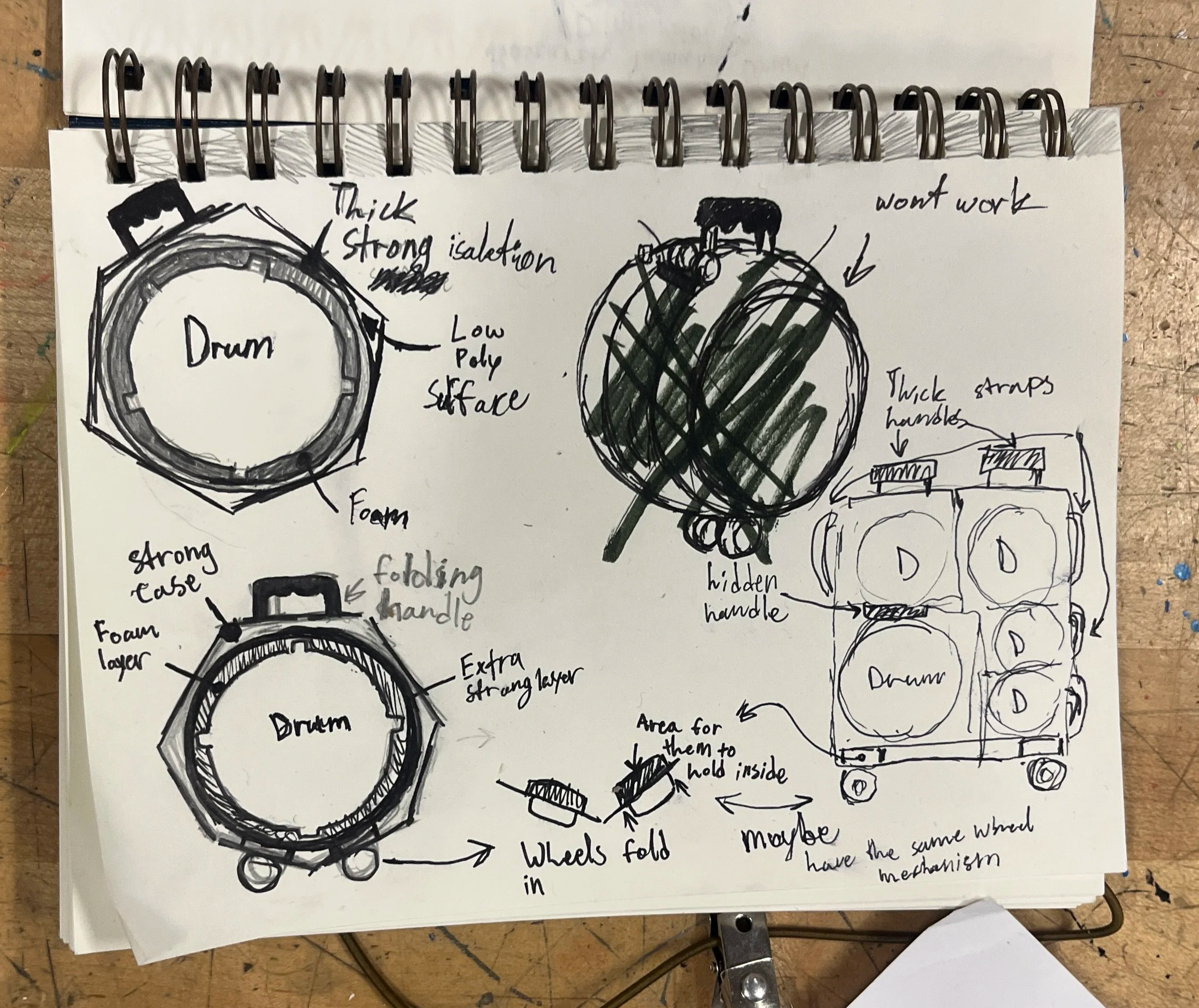
![Notebook Sketch inof potential drum case design with handwritten annotations]()
Concept Sketch
-
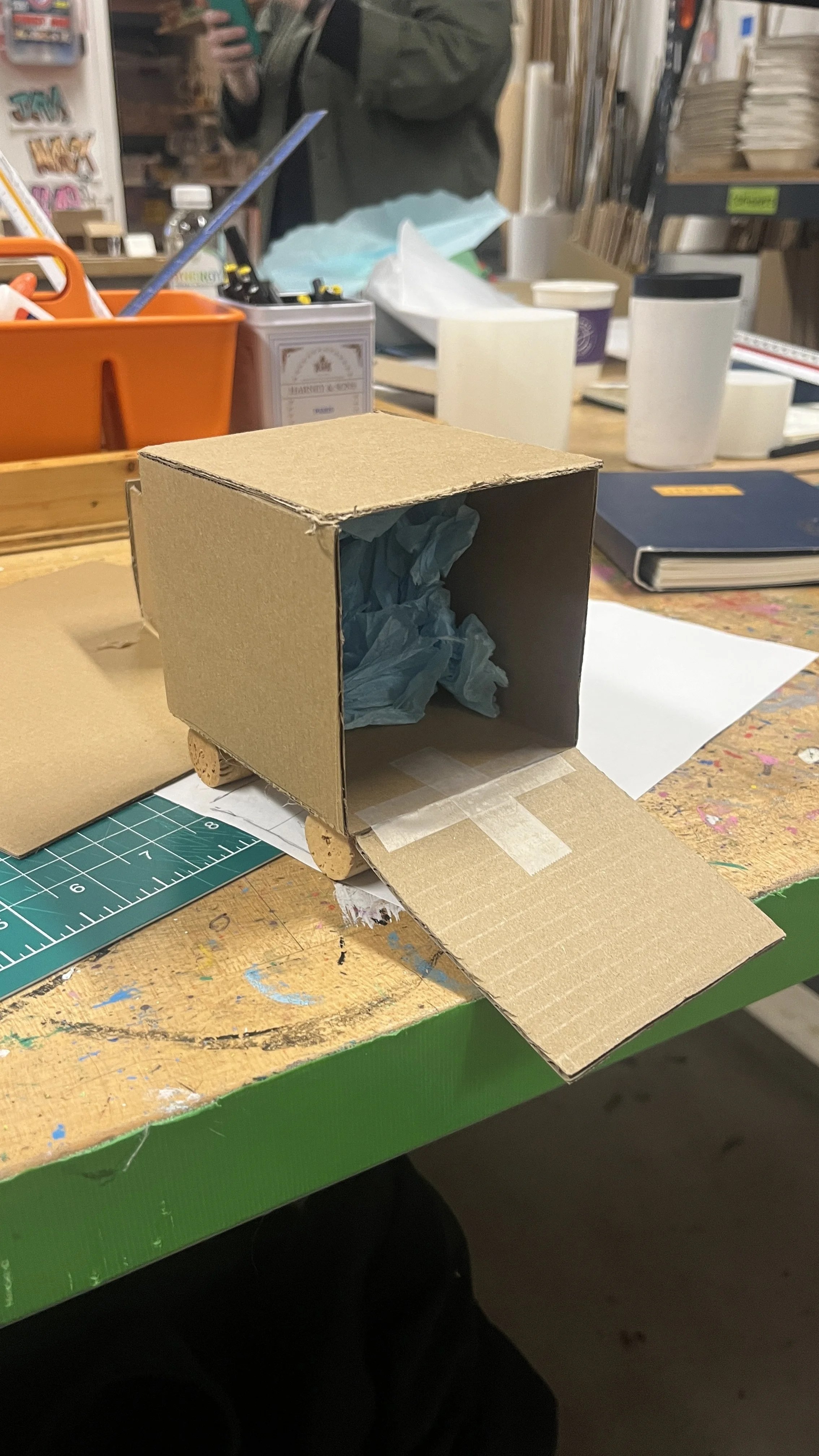
![Cardboard model with cork wheels and blue tissue paper for padding inside]()
Concept Model
-
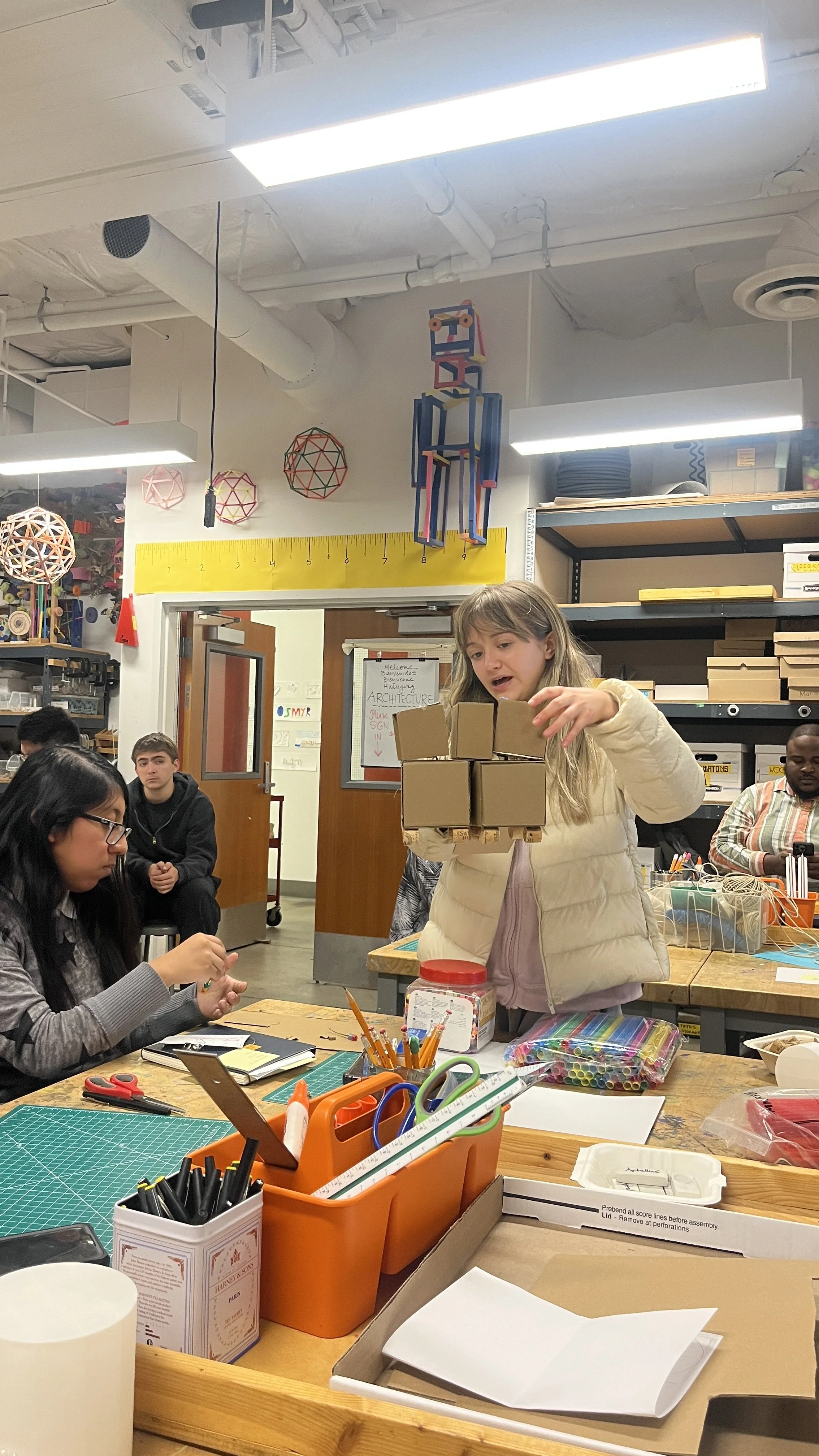
![Student holds up cardboard model]()
Group Presentations
-
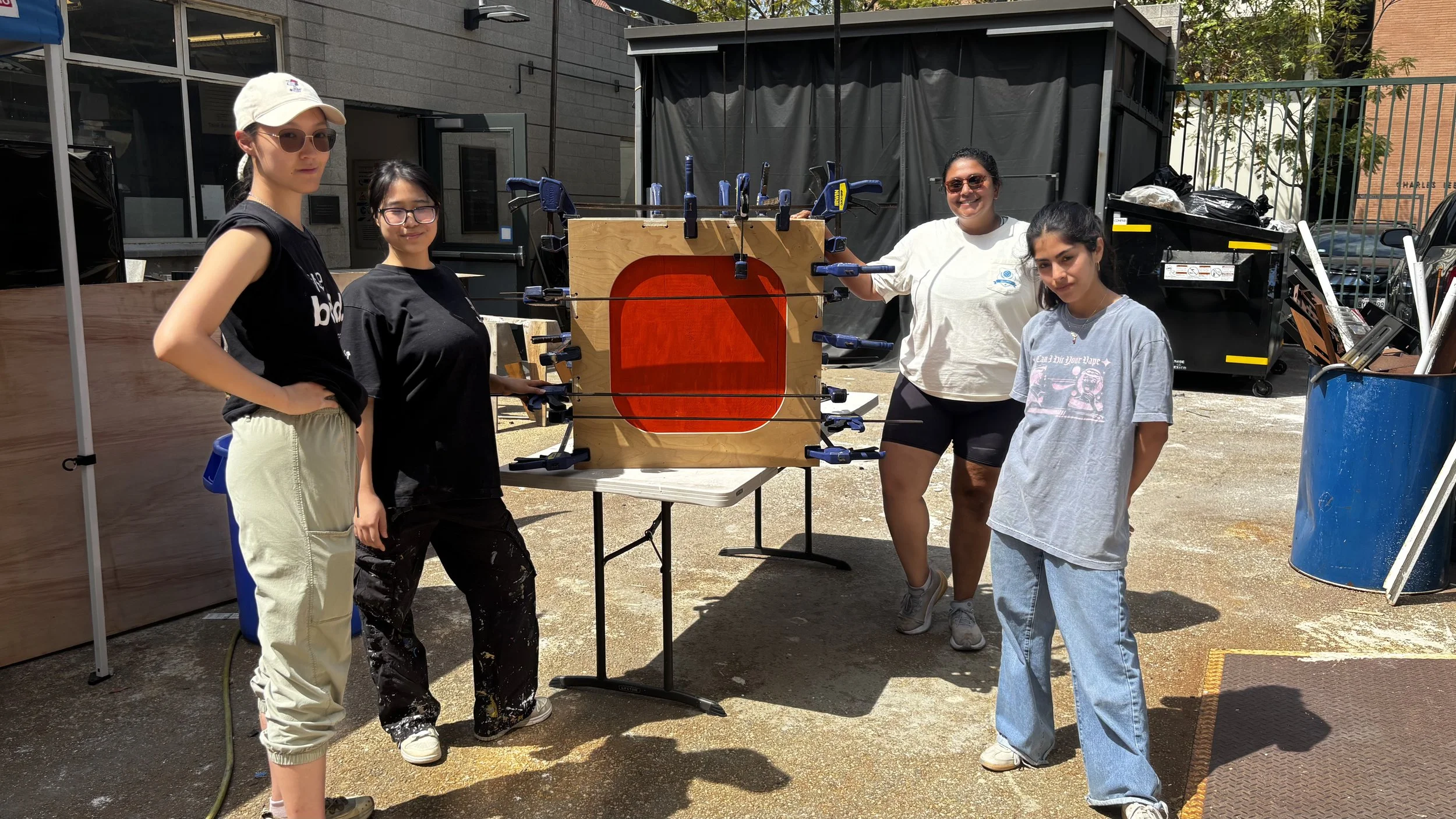
![]()
USC Architecture Students Get the Pieces Ready
-
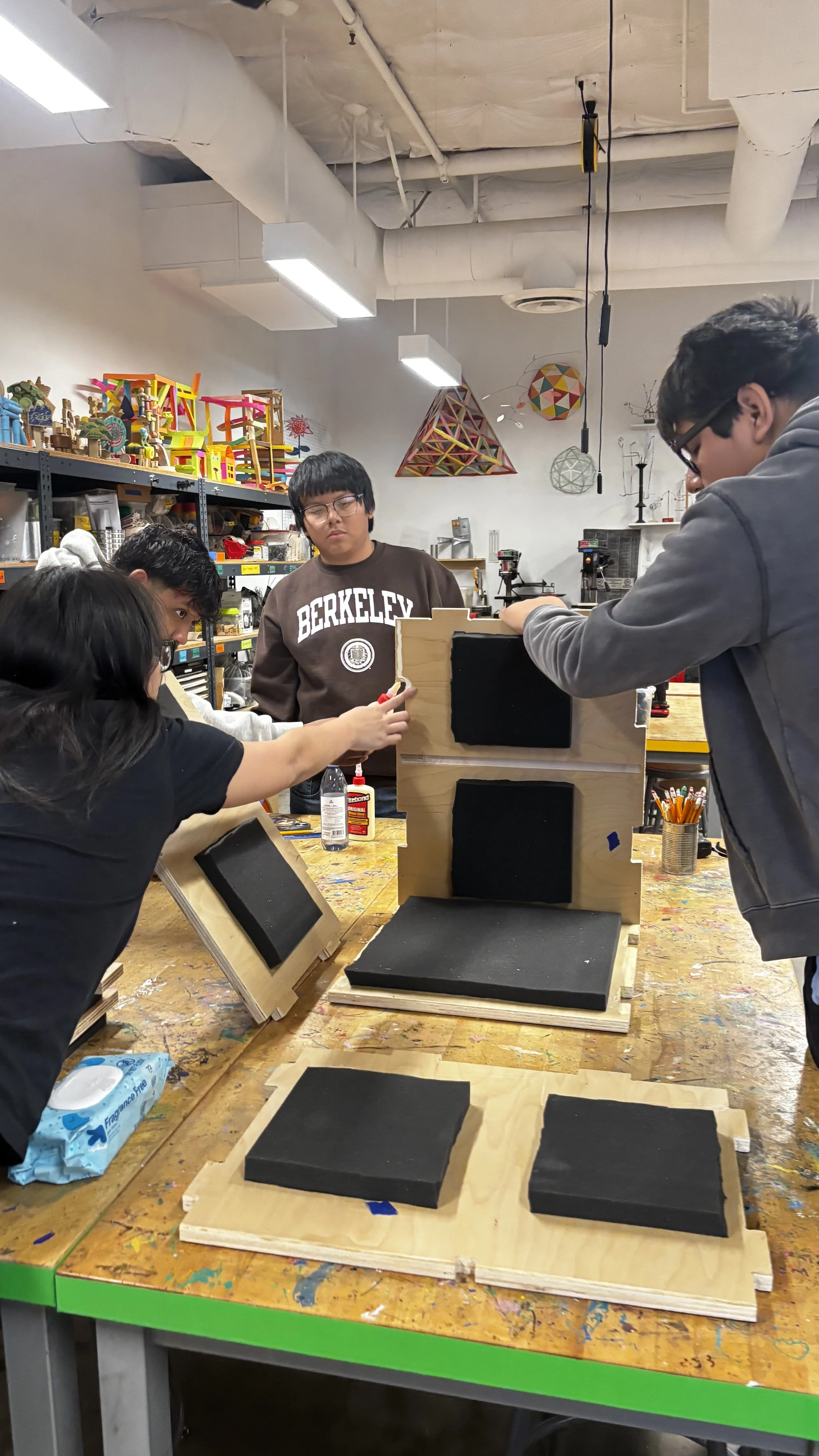
![]()
Glueing the protective foam
-
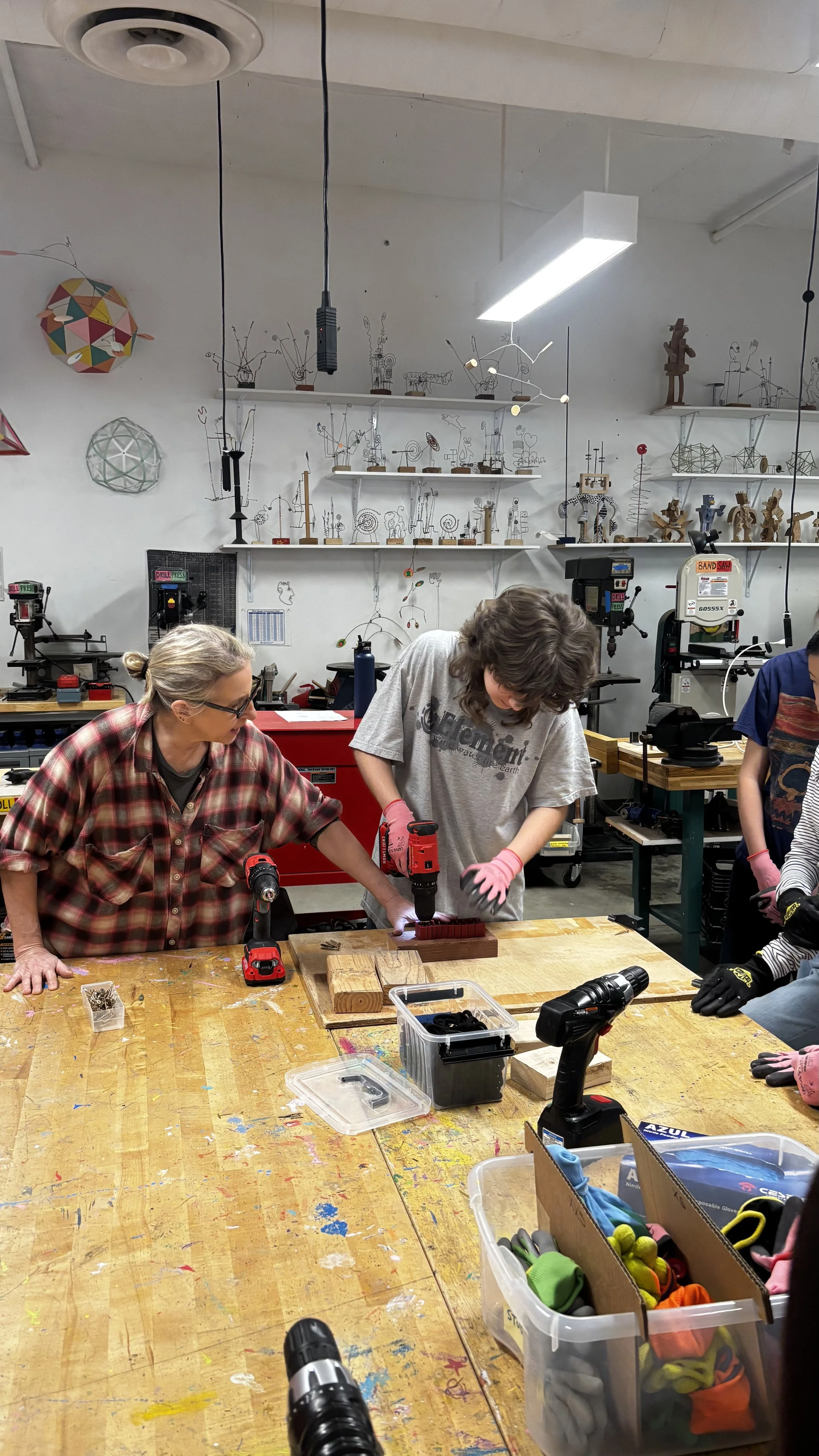
![Student drills into test wood while teacher looks on]()
First Time Using a Drill
-
![]()
Drilling the Joints
-
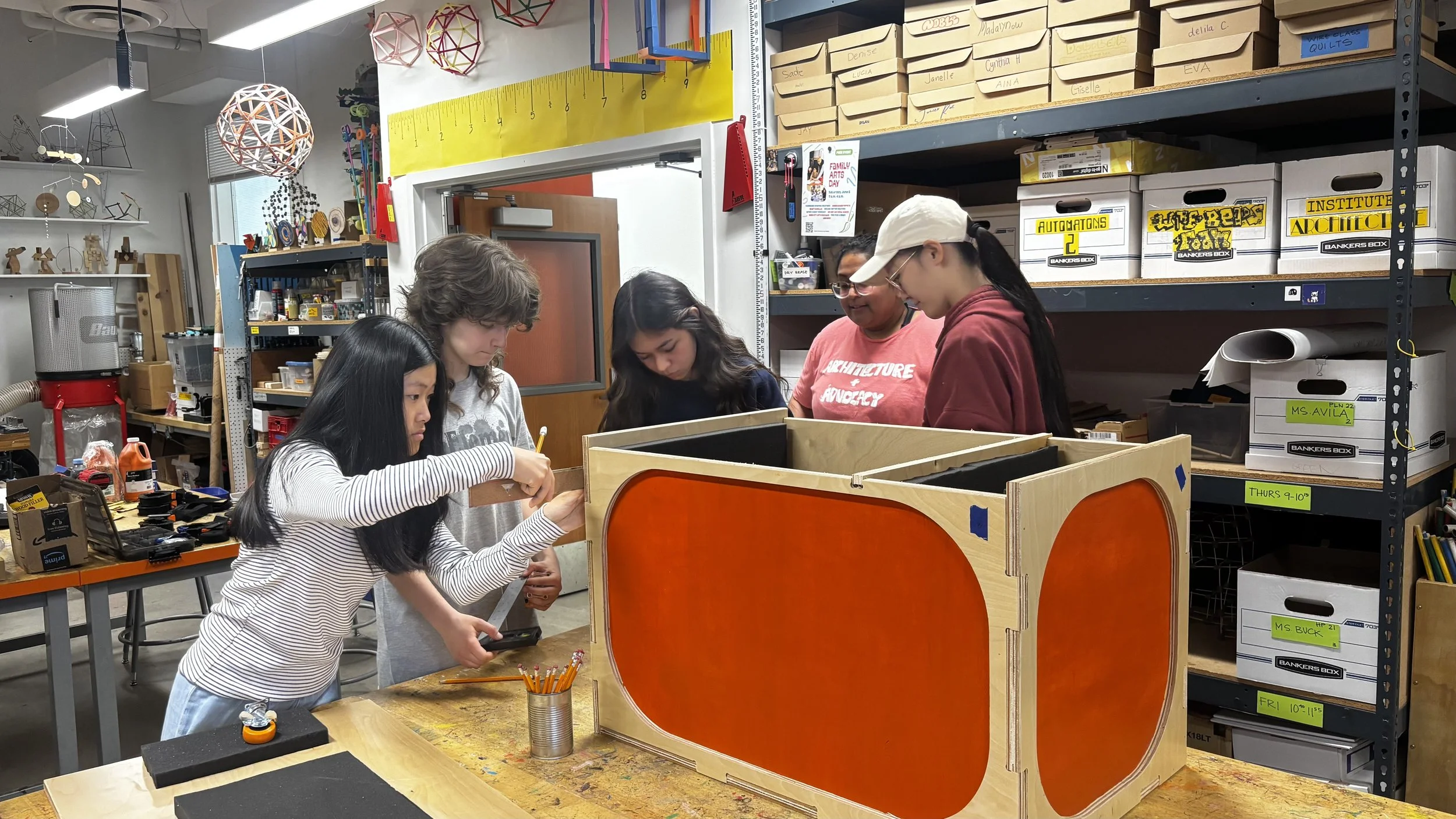
![4 corders of the box are on]()
Almost there!
Product
-
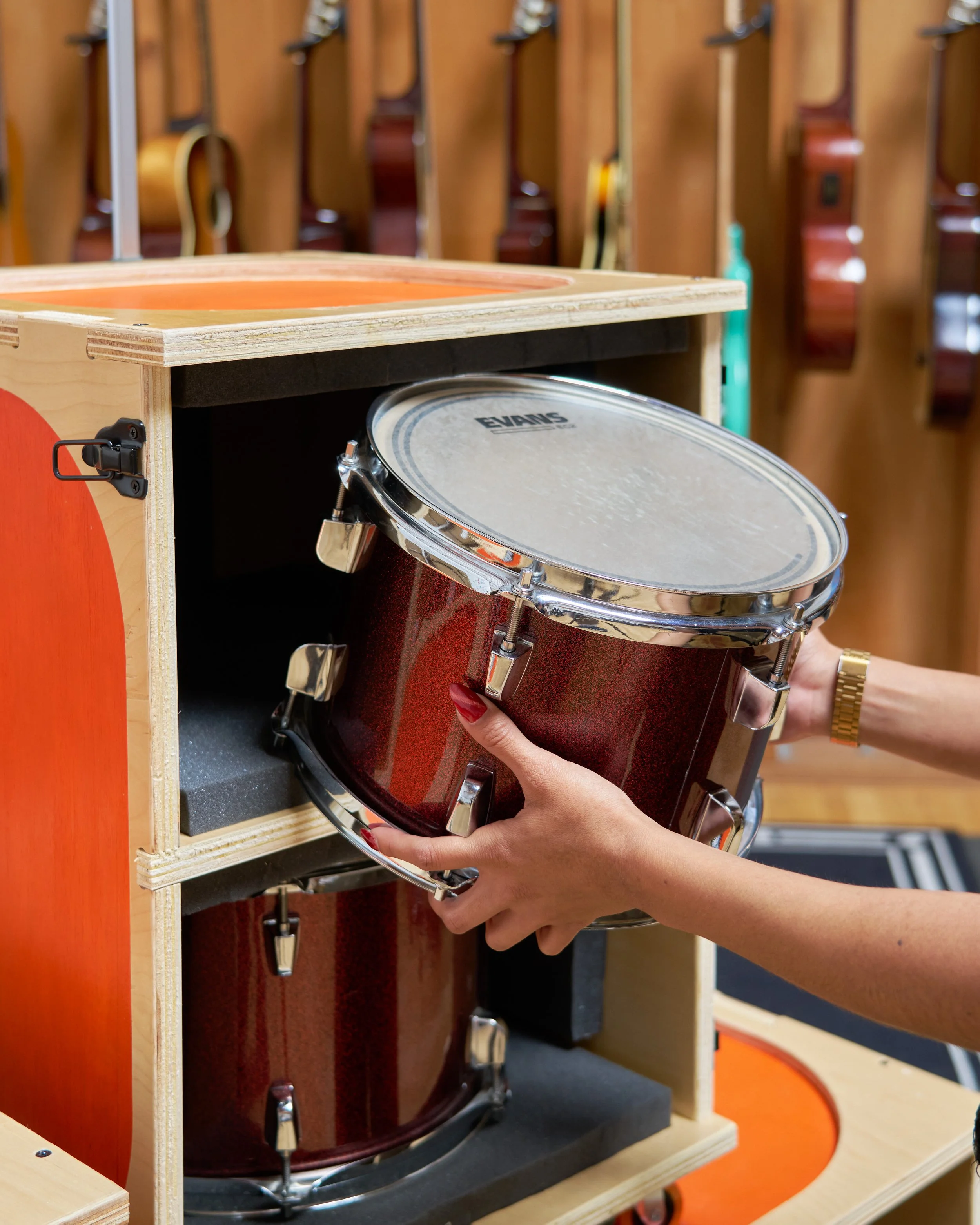
![Drum being put into case by hand.]()
Perfectly Sized for Safe Transport
-
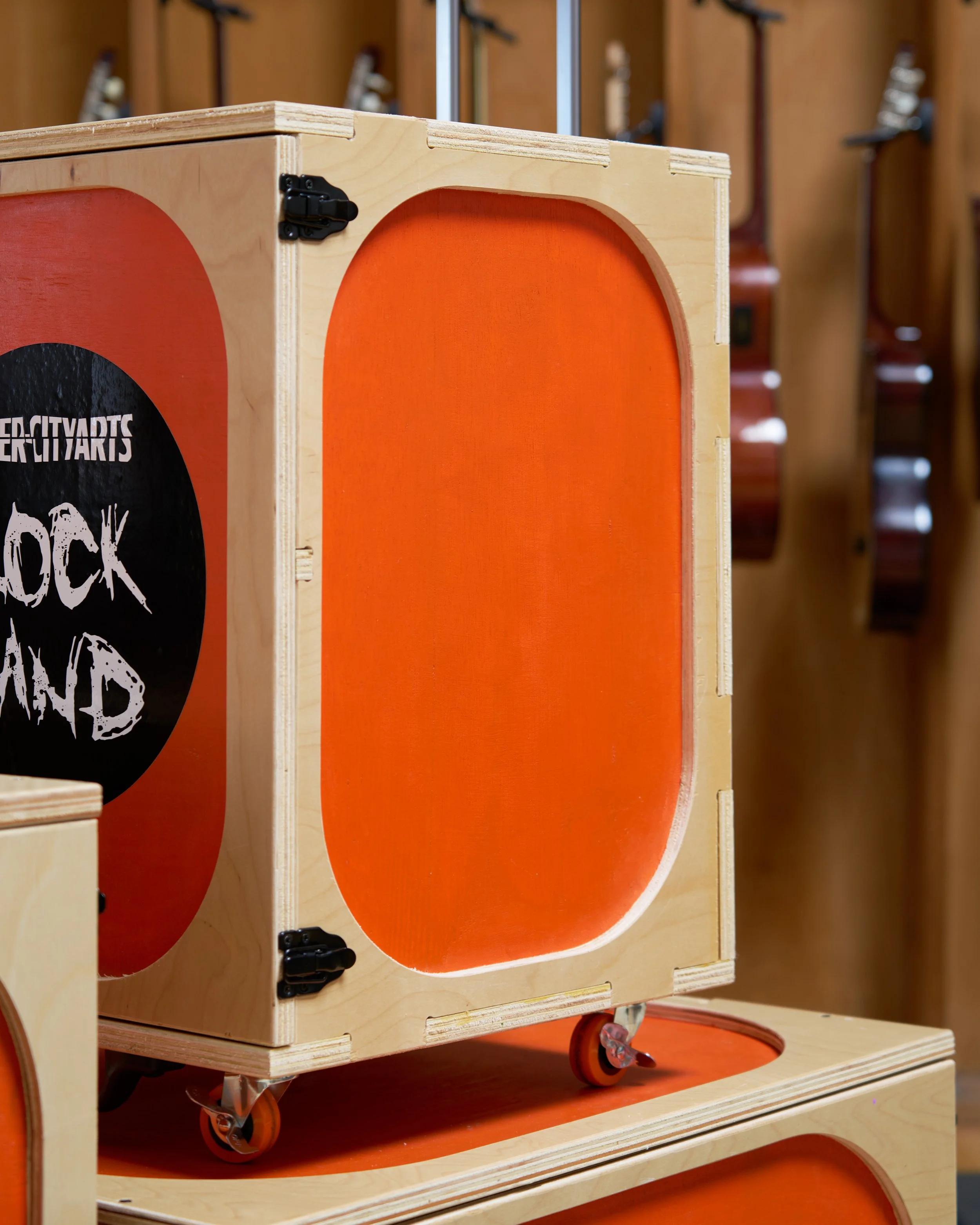
![close-up photo of the side of the drum case]()
Cutouts Make it Lightweight
-
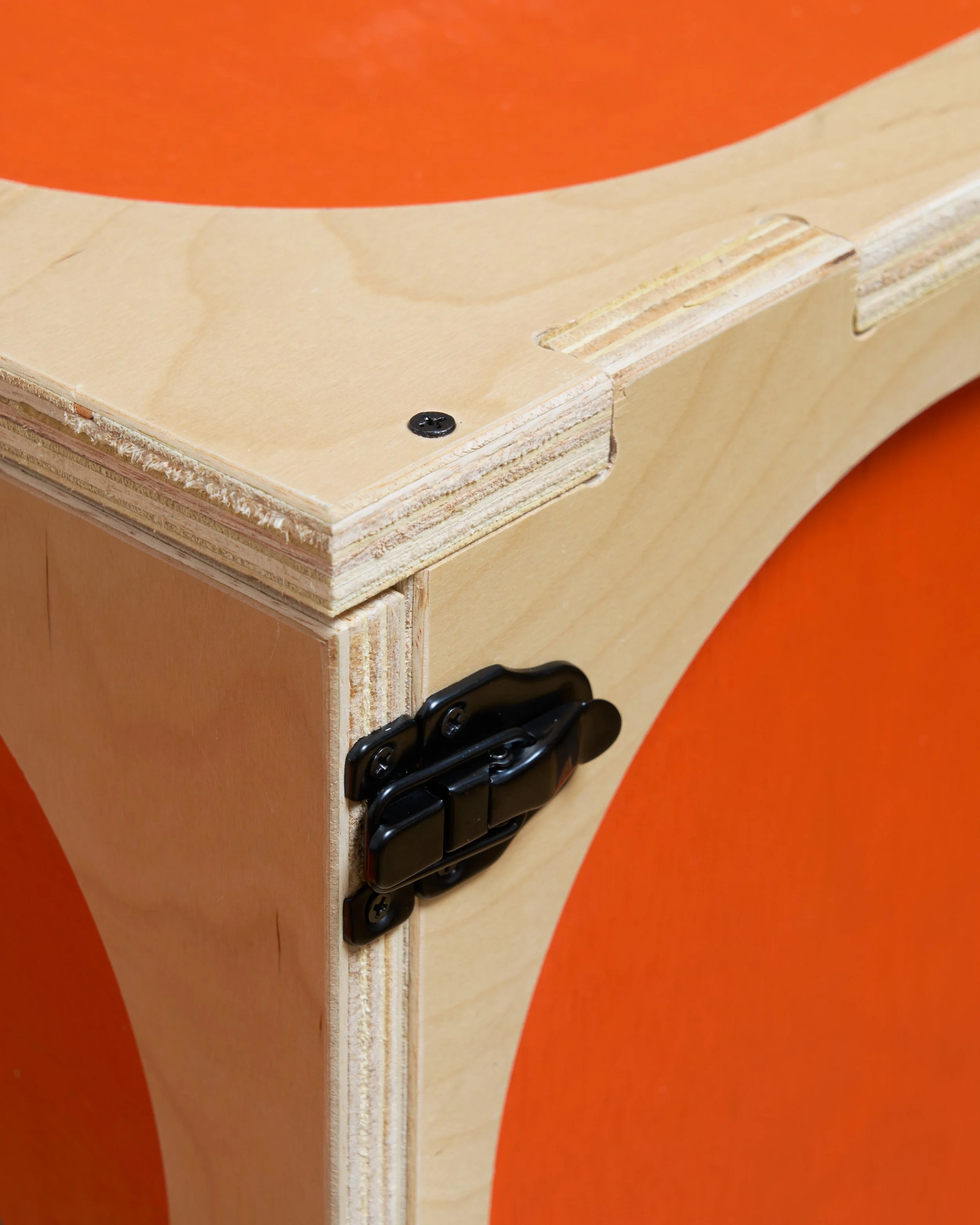
![]()
Wood Joint Detail + Latch
-
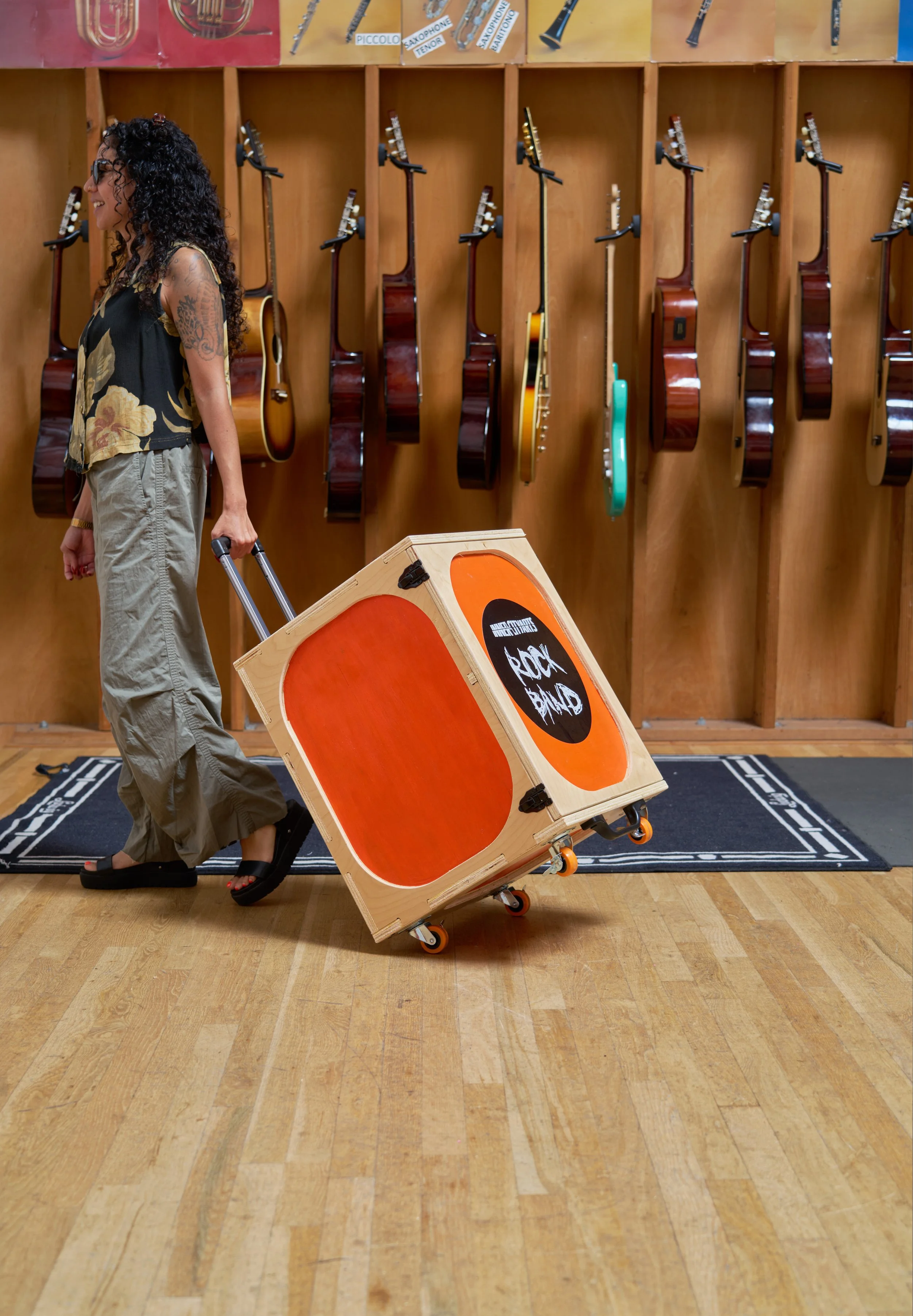
![Woman rolling the drum case like a suitcase with an extendable handle and 4 wheels]()
Rolls like a suitcase
-
![]()
Easy Loading
-
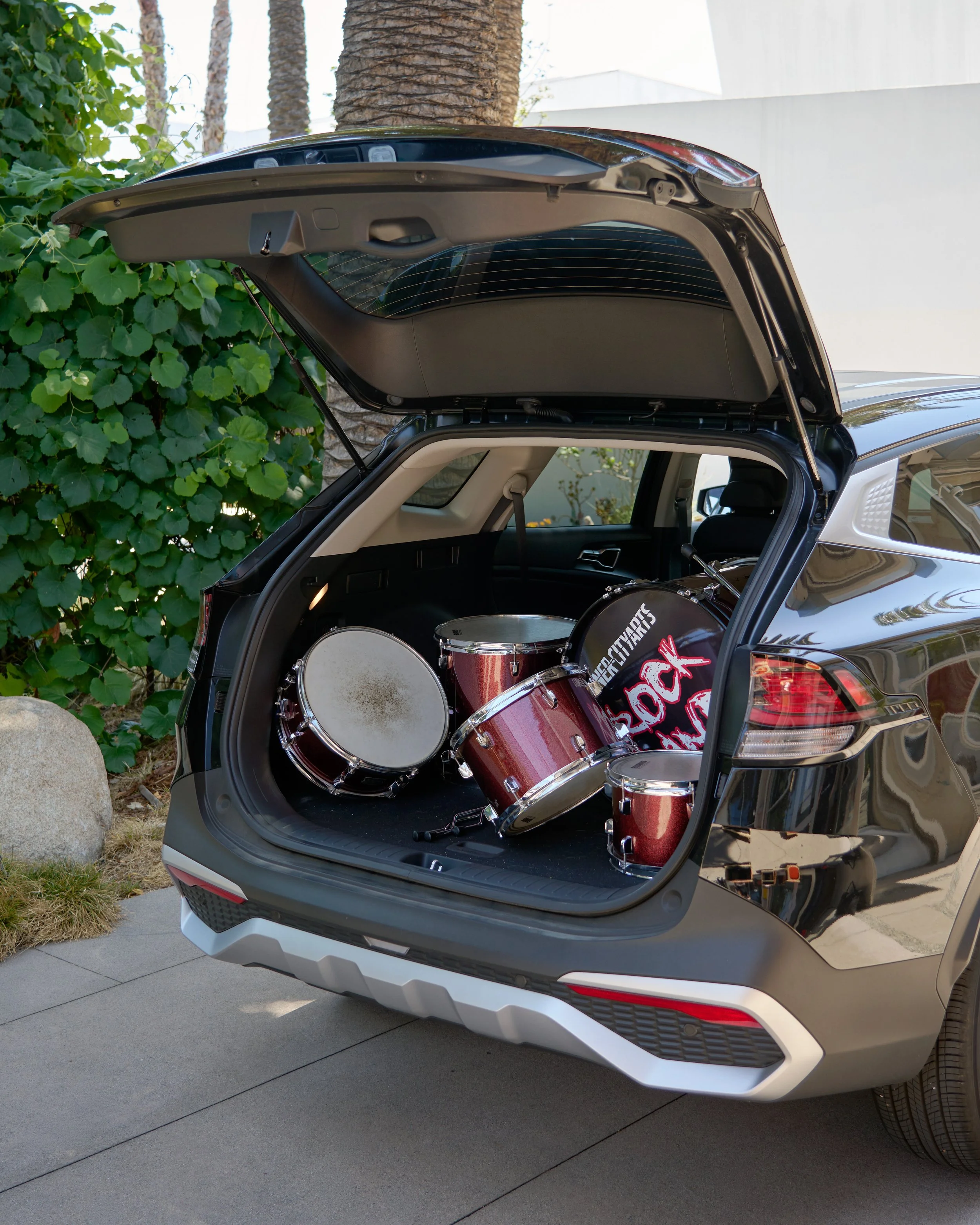
![drum cases in the back of a hatchback with trunk open]()
Fits in a Small SUV
-
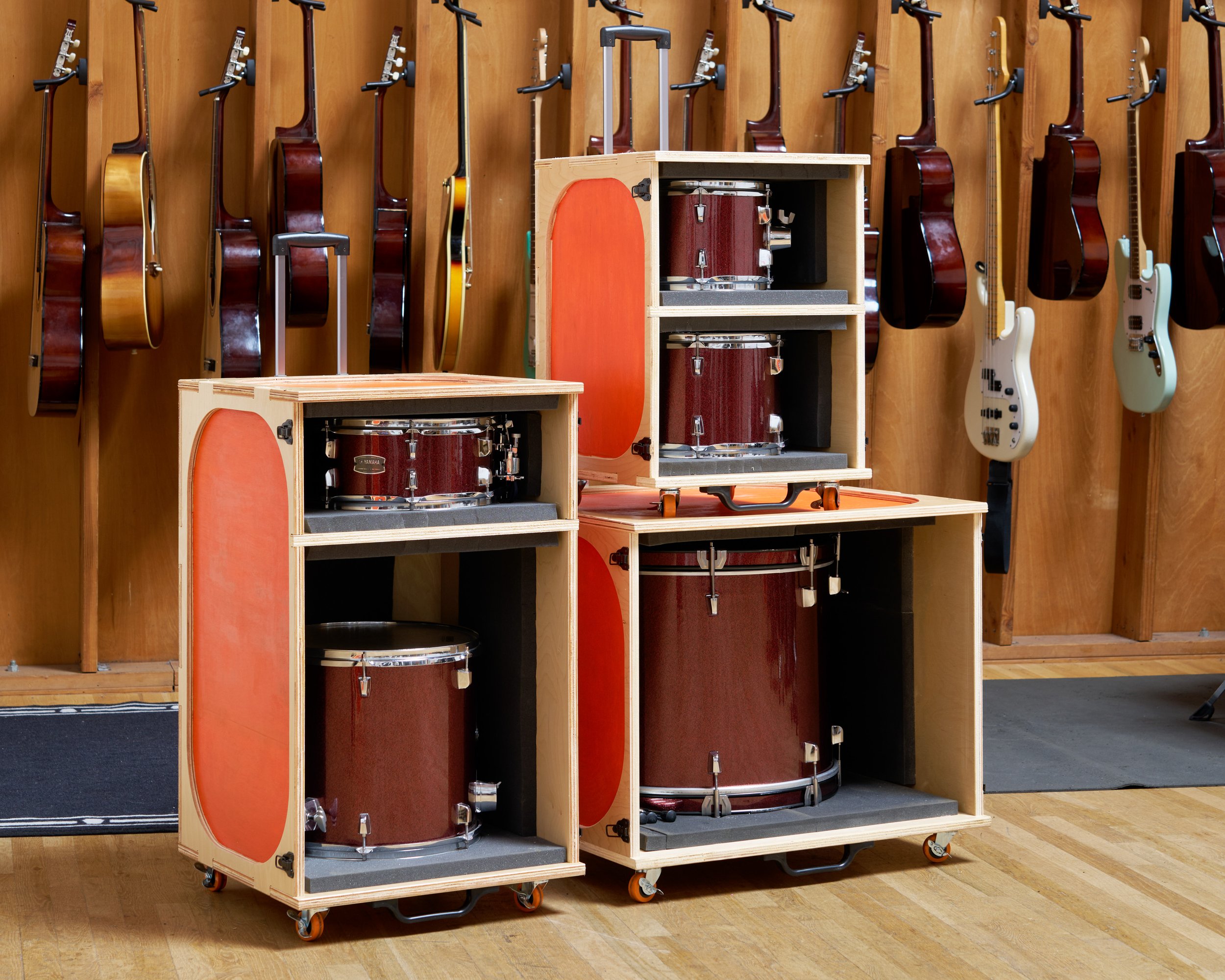
![dumb kits set up as shelves without front cover to store drums when not in use]()
Doubles as Storage Shelves