Wellbeing Spaces
Community Engagement
Partners
LA County Parks + Recreation
office42 architecture
LA County Department of Mental Health
Project Type
Community Engagement
Locations
Loma Alta Park, Altadena, CA
Pamela Park, Duarte, CA
Stephen Sorensen Park, Palmdale, CA
El Cariso Community Regional Park, Sylmar, CA
Amelia Mayberry Park, Whittier, CA
Audience
Seniors (60+)
Adults (18 - 59)
Youth (10 - 18)
Project Leads
Kianna Armstrong, Erin Light
Date
2025
“I grew up playing in this park. Now I get to take my daughter here. I'm so thankful for all the investment... it's made it a really family-friendly place. "
Five LA County parks are getting new outdoor teen centers and “wellbeing spaces” for relaxation and connection. Architecture + Advocacy ensured the designs reflected what residents actually asked for, from accessible sites to water fountains.
Public parks are essential mental health infrastructure, especially in low-income communities with limited mental health resources. In LA County parks, “Our Spot” teen center provides a rare, safe, dedicated space for teens to hang out and be themselves.
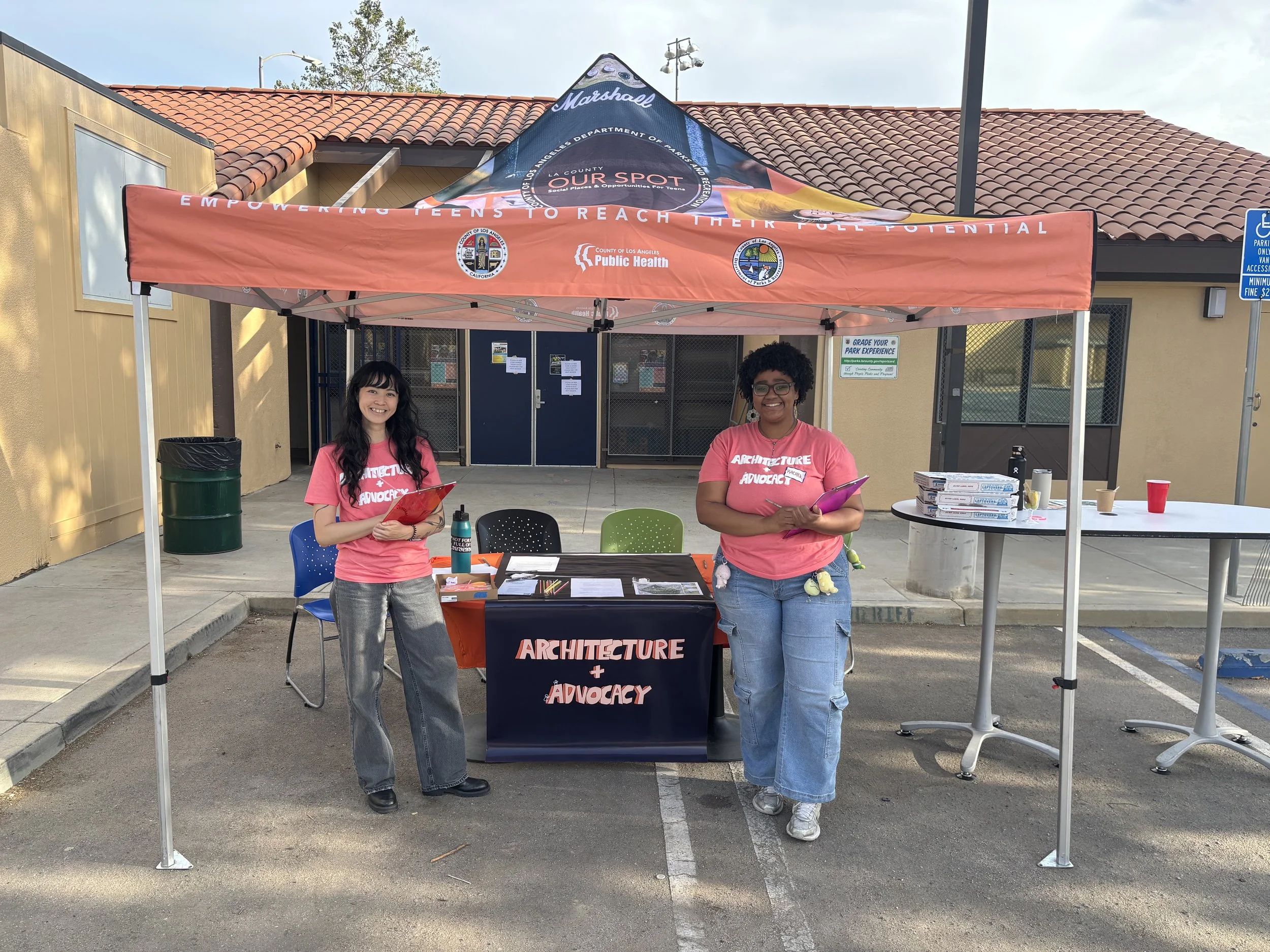
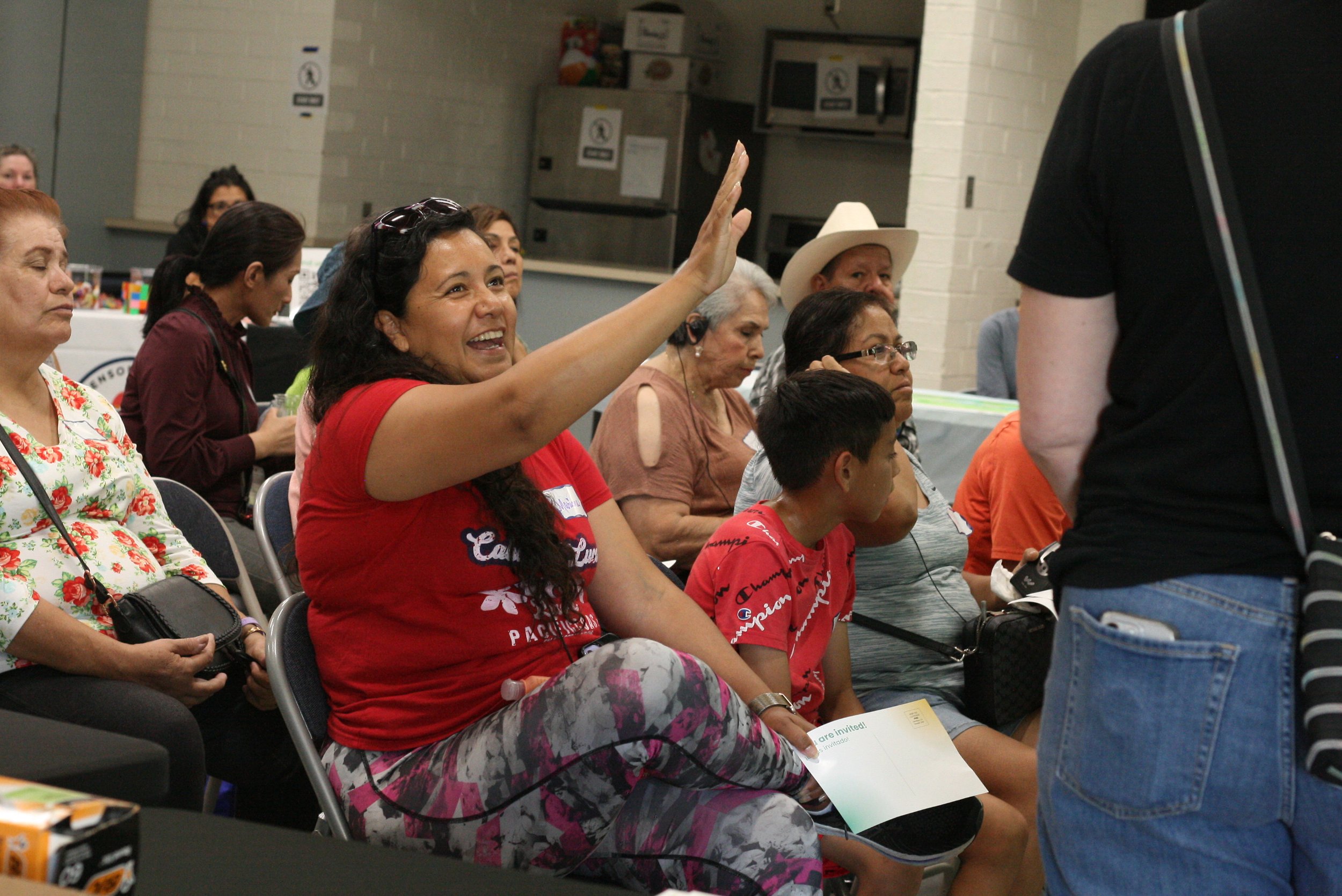
The LA County Department of Mental Health invested in new "Wellbeing Spaces" and "Our Spot" renovations across county parks. Architecture + Advocacy led Community Engagement at 5 of the parks by running surveys and hosting workshops to make sure resident input shaped the final designs.
How Community Voices Shifted the Design
Accessibility for seniors - We selected sites with the flattest, easiest path from the parking lot — a priority that came directly from seniors with limited mobility.
Protecting what already works. At one park, residents flagged the only open grassy area as critical for soccer, running, and picnics. At another, the community asked for the new space to be visible from the playground.
Water fountains stayed in. Drinking fountains Were the #1 amenity requested by residents. When the project risked going over budget, we made sure they weren't cut.
Details like these -- where a bench is placed, or if a fountain stays in the plans -- are what make the difference between a space people actually use and one they walk past.
-
The new Wellbeing Spaces will include areas for yoga, meditation, and shaded seating. The teen centers will have new enclosed outdoor additions -- so teens can hang outside together -- plus new amenities like pool tables, ping-pong, shade structures, and comfortable seating.
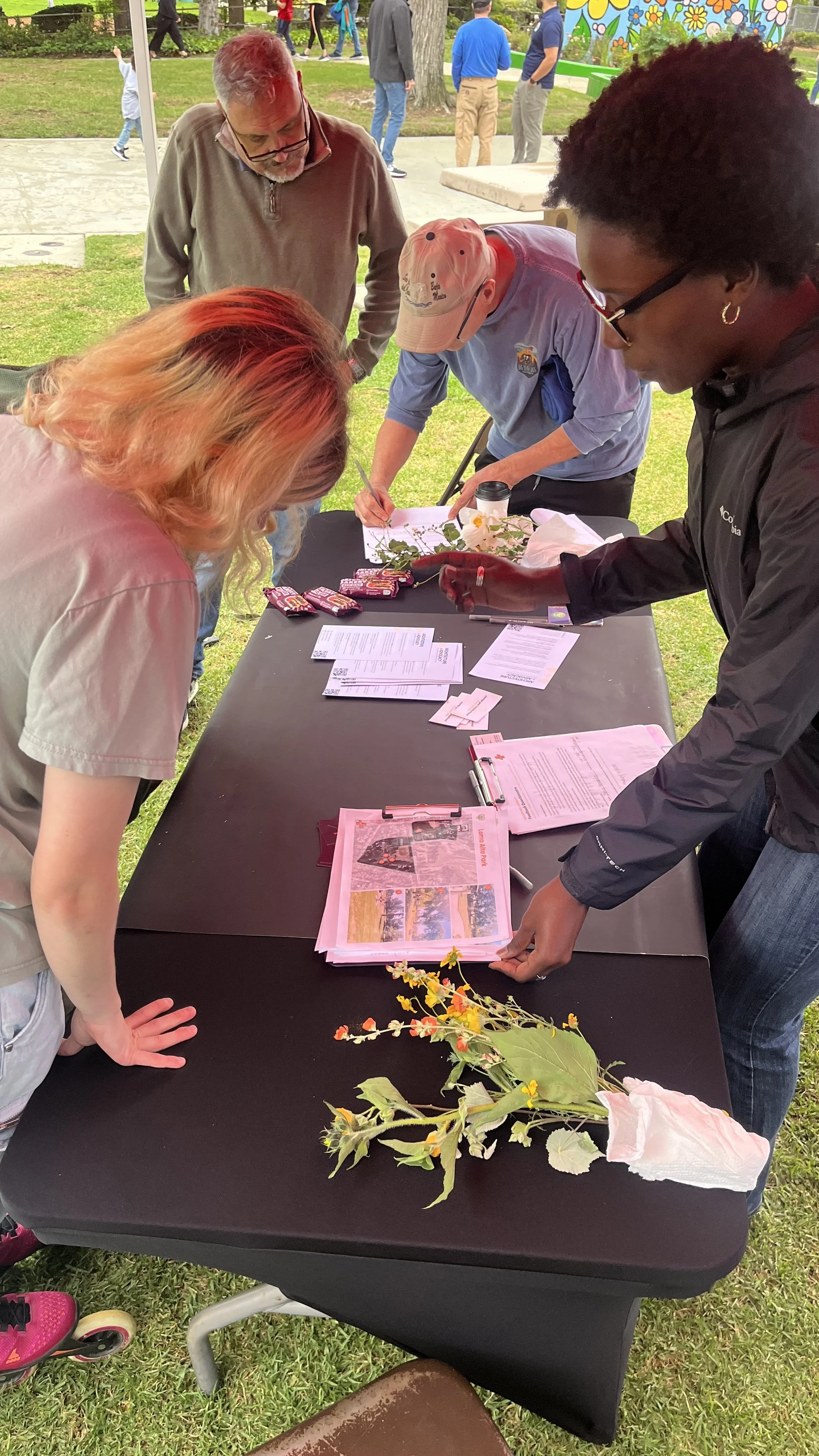
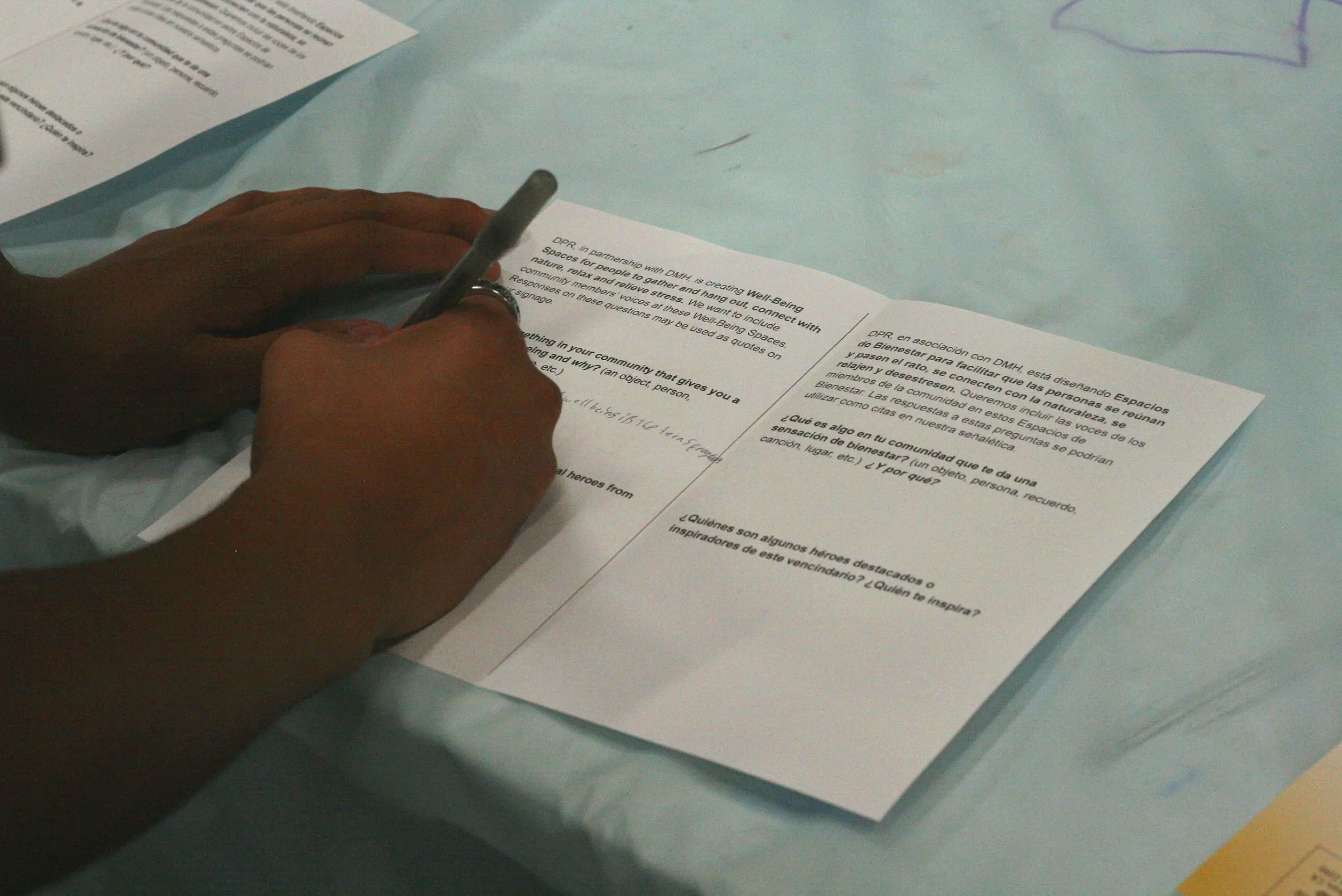
Round 1: Surveys asked park-goers:
Where do you go in the park to relax?
Where should the new space be located?
What features should it include?
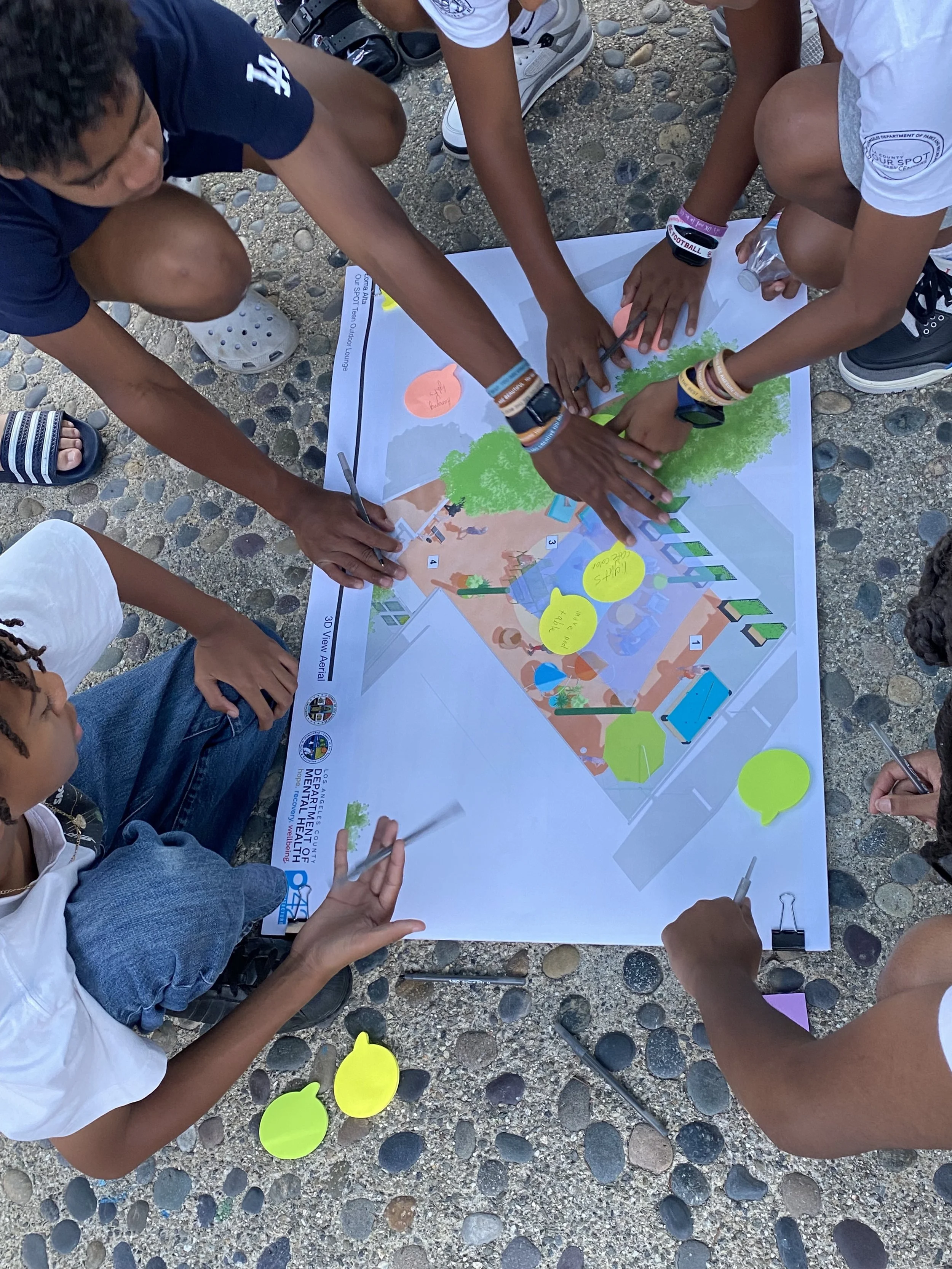
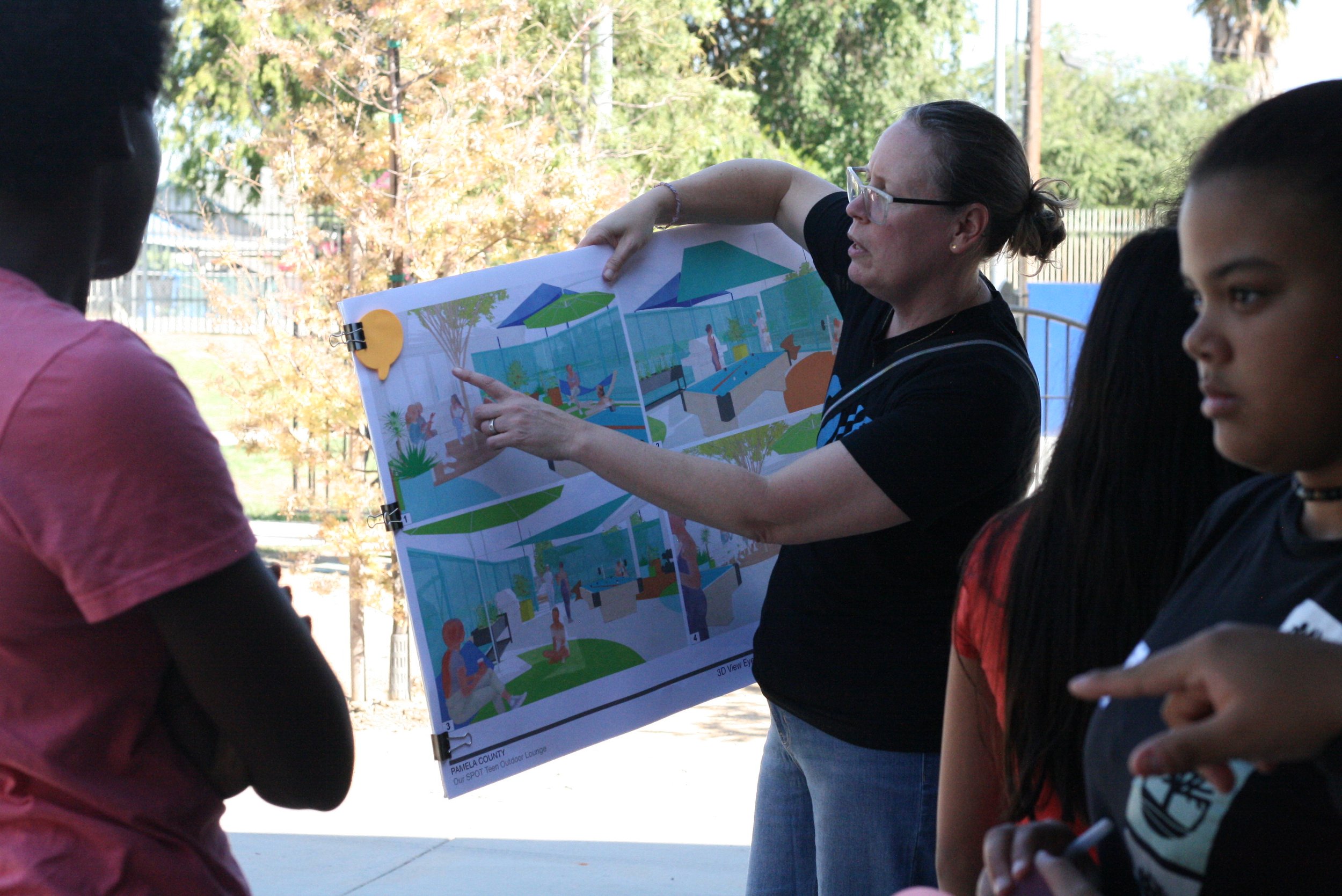
Round 2: Community Feedback Workshops
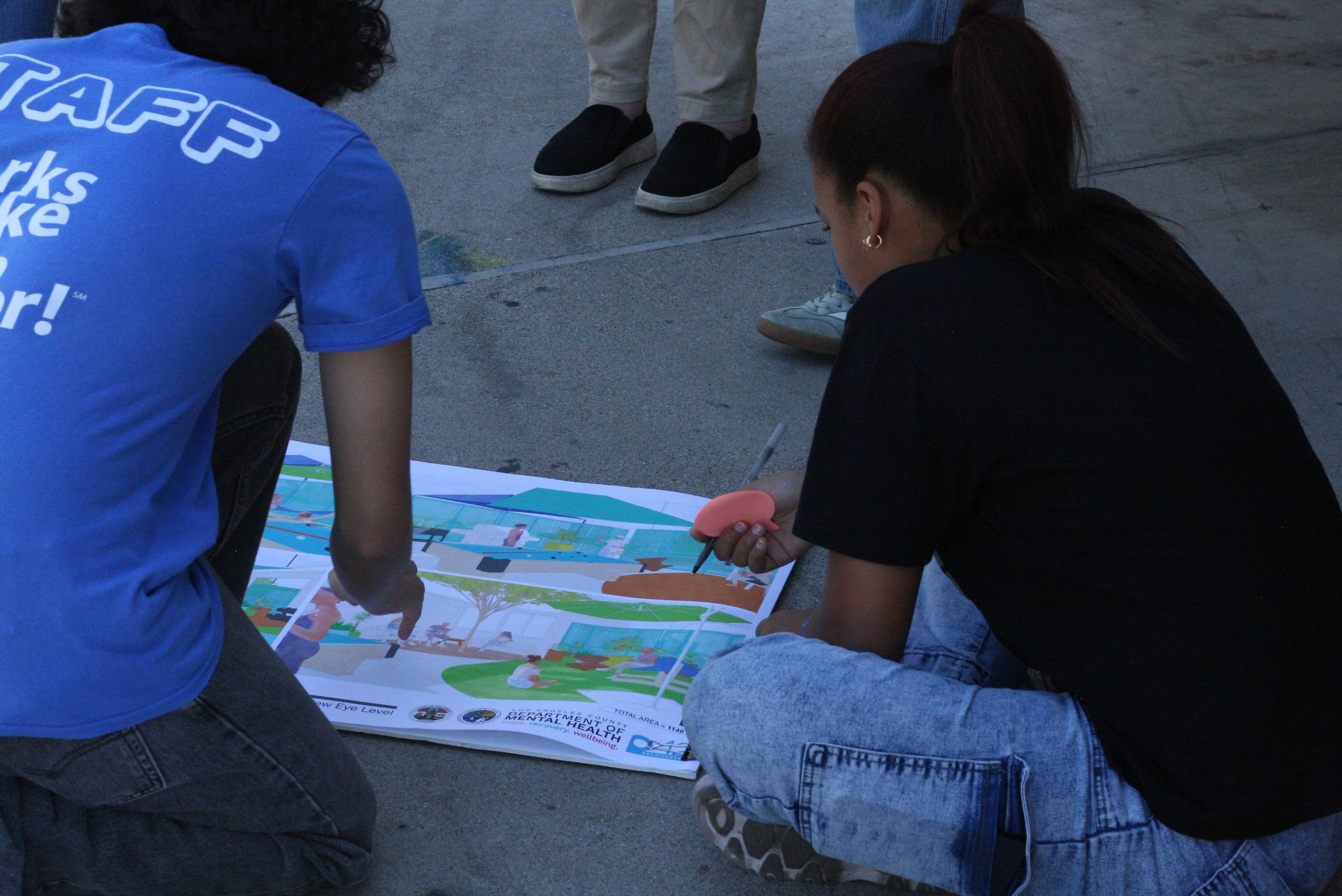
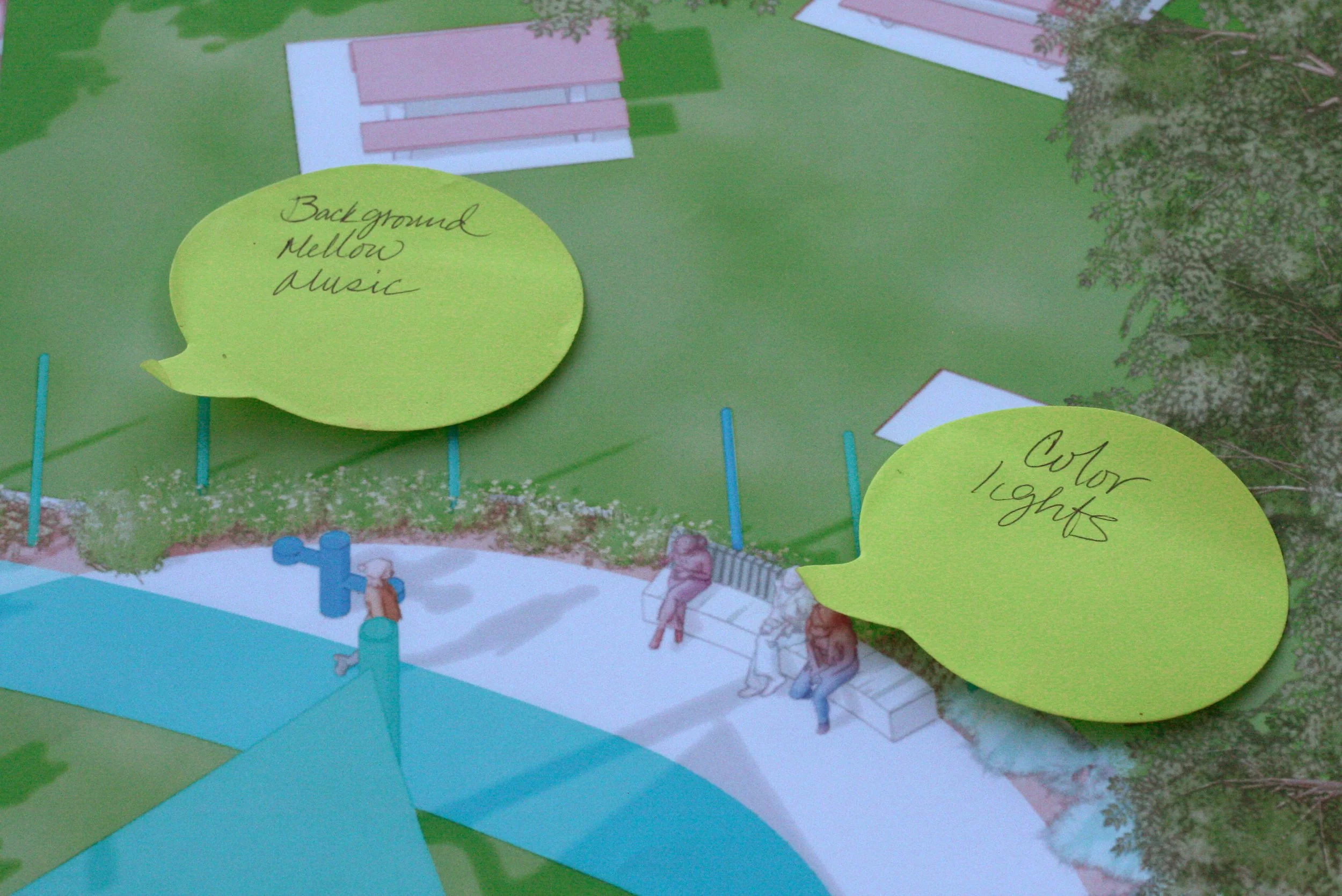
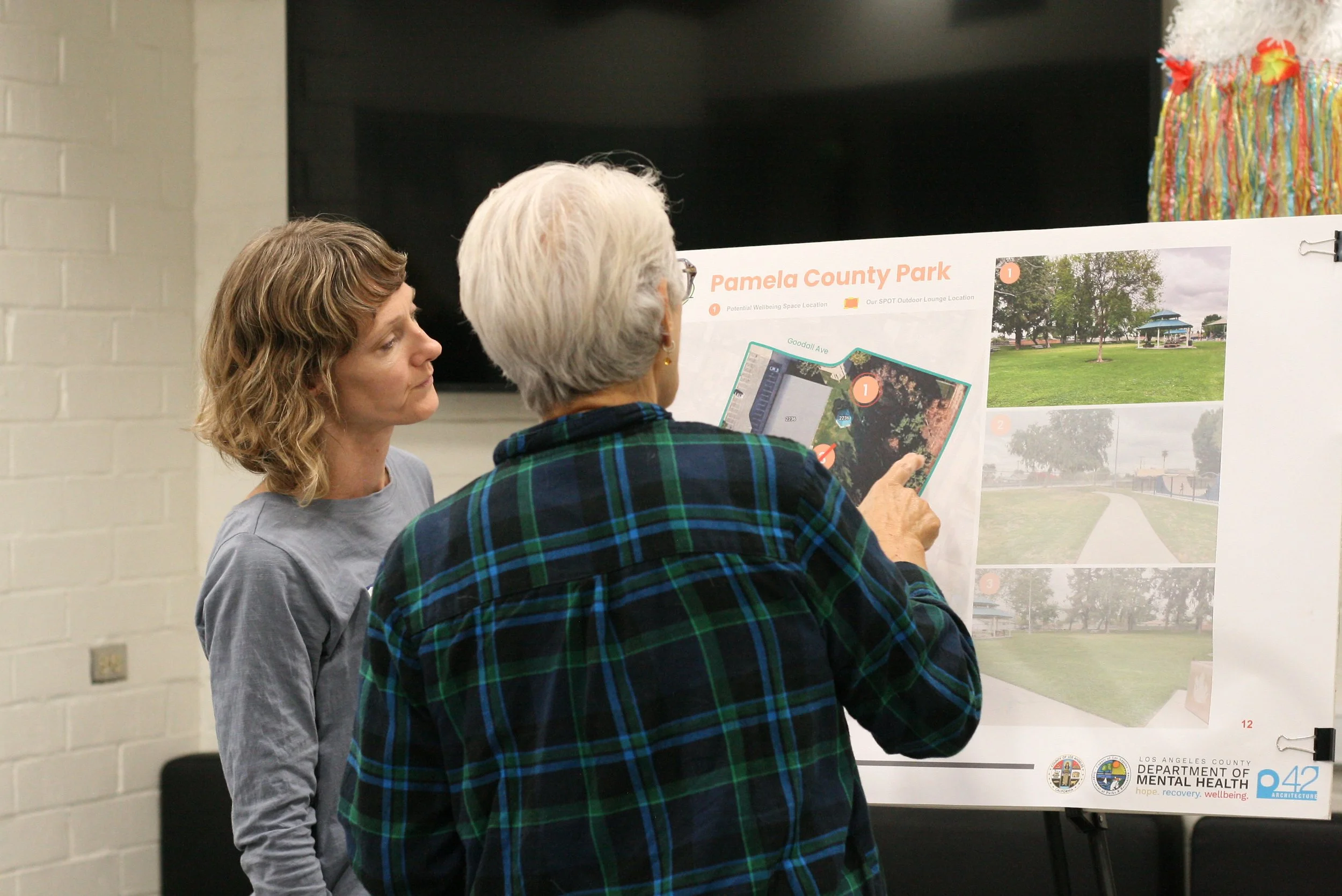
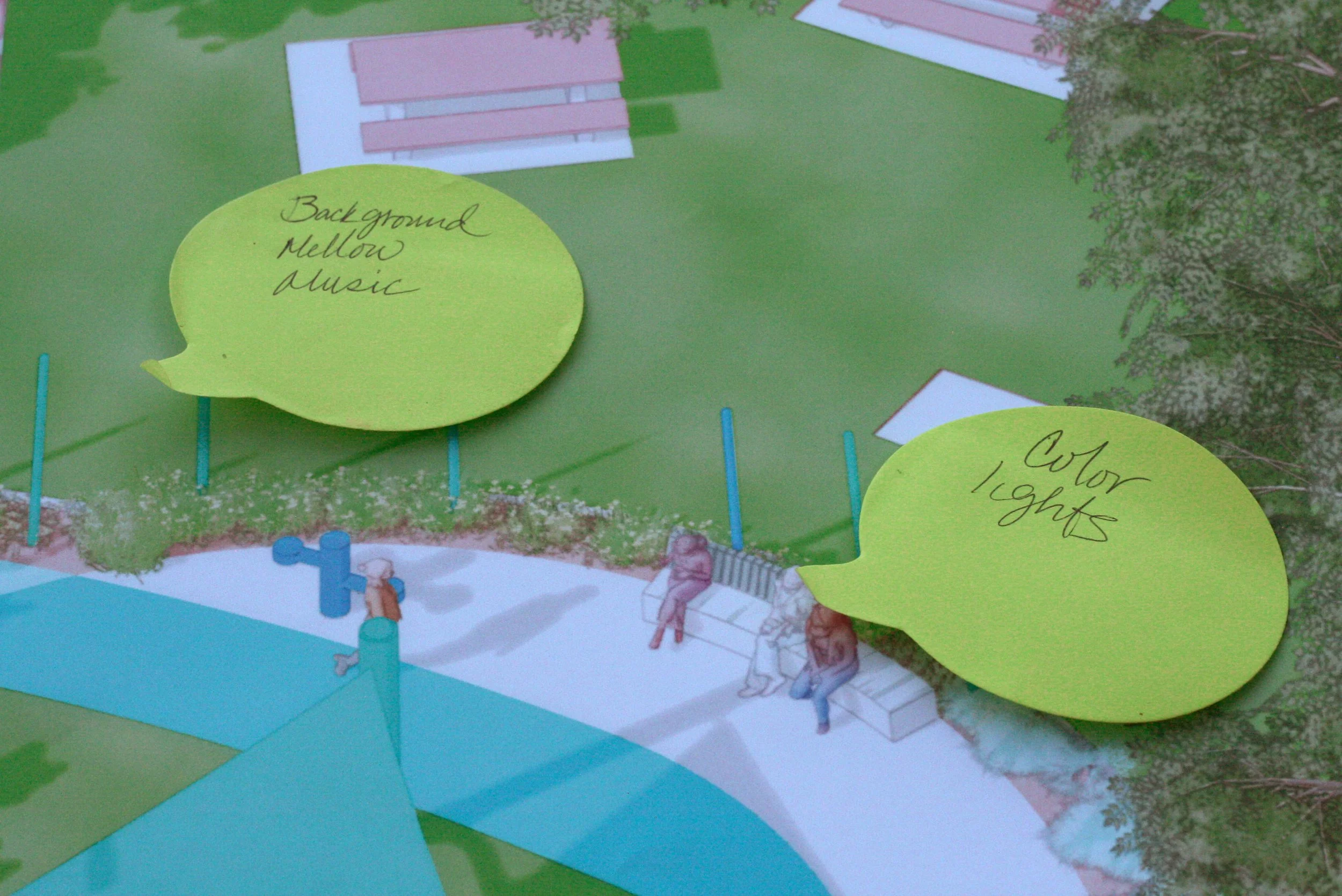
We presented design concepts to community members and teens, gathering priorities to guide final decisions.
Total Impact
3 Senior Workshops
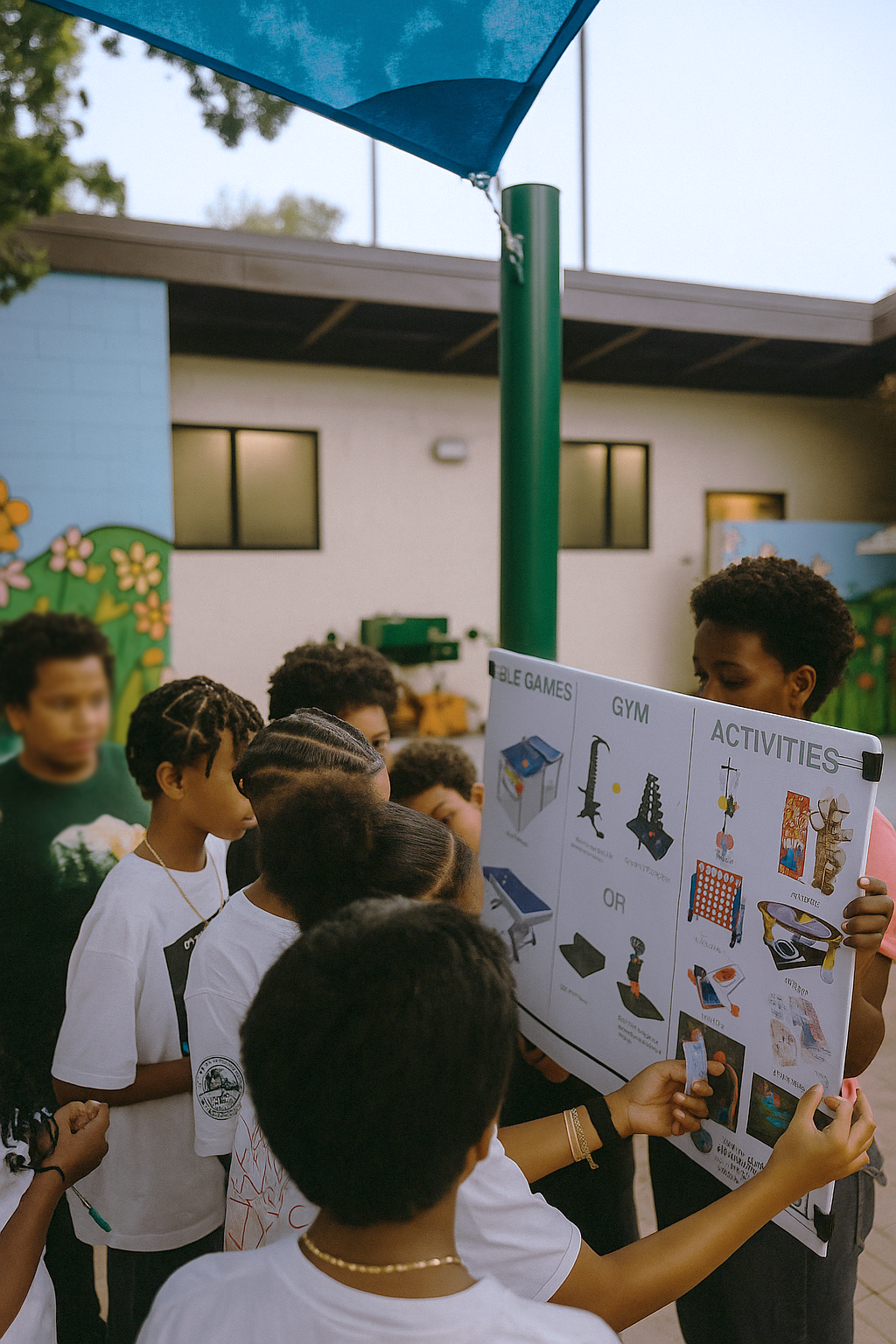
8 Youth Workshops
10 Engagement Events for the general public
387 resident voices incorporated into designs
-
![]()
Mobile Community Surveying
-
![]()
Teen Workshop
-
![]()
Listening to Design Feedback
-
![]()
Site Selection Survey
-
![]()
Stephanie Ragle (office42 Architecture) presents designs
-
![]()
Q+A During Engagement Event
-
![]()
Teen Workshop
-
![]()
Sticky-Note Feedback